

Prep Your Soil, Plan Your Plantings
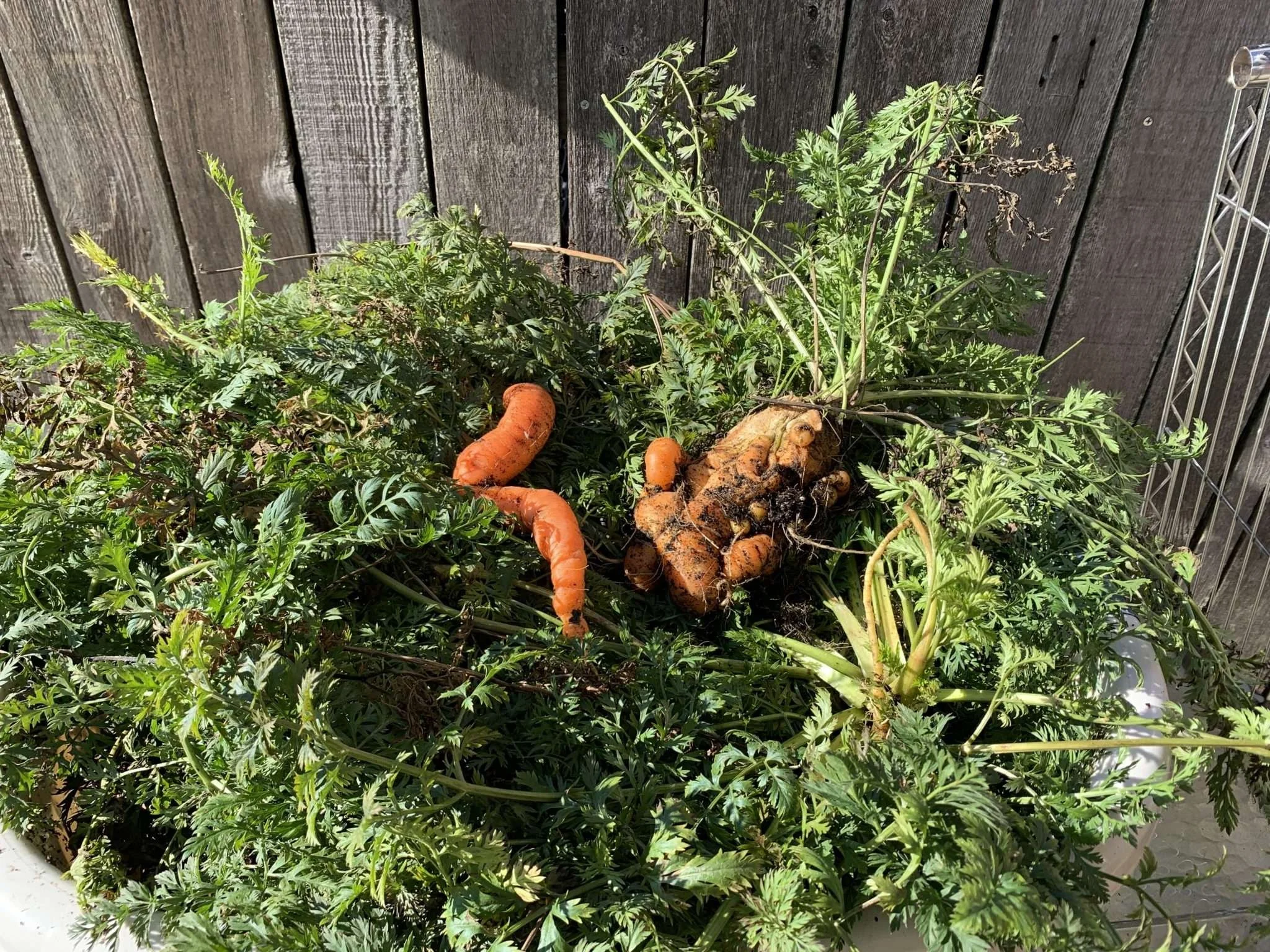
Wonky carrots at Mezzacello-Urban Farm
It’s important to plan your garden well. It’s also important to pay ATTENTION to the planting instructions that come on your seed packets. Otherwise your plants and vegetables will all go feral - literally. Take the case of the carrots and turnips.
Well drained soil? Check.
Soil acid and nutrients balance in balance? Check.
Soil crumble, structure and amendment schedule correct? Nope.
Need more soil depth, need more sand.
Map Your Beds
So for this year as I map and plan my garden bed use, I will pay attention to the microstructure of the soil and go boldly forward knowing what needs to happen where. I didn’t realize this before. But failure is a powerful tool.
While technically this is not a failure, there is room for improvement.When I first started gardening I saw all soil the same - an automagic earth outlook - to paraphrase Paul Simon.
We need to be more selective, sophisticated, and nuanced if you want maximum yield from a garden. The soil and it’s structure is important, the water is important, the balance of nutrients and minerals is important, and the microecologies (bacteria, fungus, insects, arthropods) are important.
In addition to “Crazy Carrots” and “Torpid Turnips” I had about 20% mush vegetable some sort of fungus or parasite. I need to get a handle on that as well. I also need a proper root cellar, but that will have to wait.
What lessons have you learned the hard way? Feel free to share your stories. This is year five for me. I have had:
the building planting year
the year of the external soil nutrients and explosive, unsustainable yield AKA store bought fertilizer
the year of the belladonna massacre and the nitrogen catastrophe
the year of neglect and resetting
and this is my first year of balanced, reliable yields.
I’ll remember this victory fondly as I move forward with Mezzacello.
