

Mezzacello Age of Steel Part 5
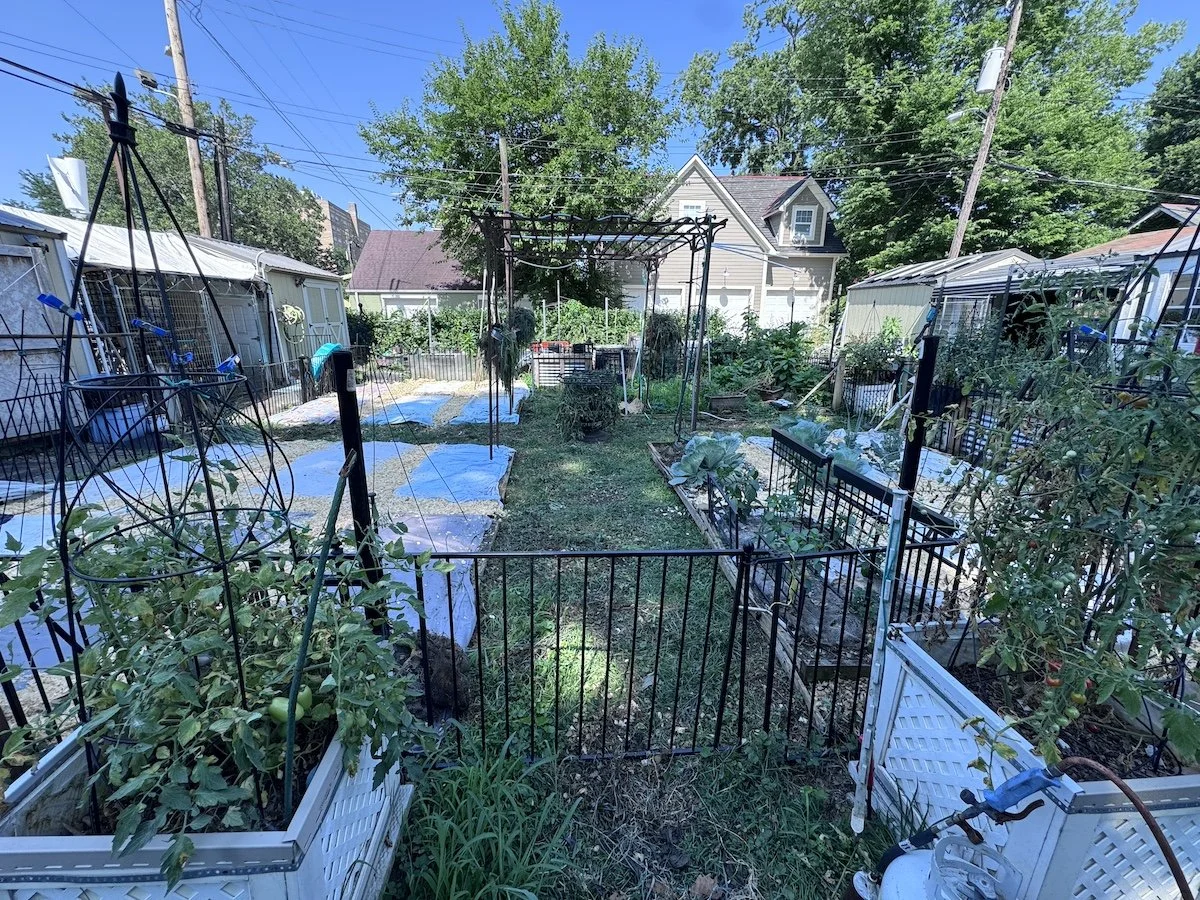
The potager garden with the mulch complement of newspapers, bedsheets, yard waste bags and pine shavings
The potager—our primary food-producing garden—is located in the northwest quadrant of Mezzacello Urban Farm. It consists of four 3.5-meter (11’6”) square plots, each containing six beds, totaling 24 beds.
At the center of each quadrant stands a 3-meter (10’) steel trellis. These structures support vertical gardening and serve as part of our integrated watering system.
Because the potager is edged entirely in steel, using the flamethrower for initial clearing was a breeze. Once cleared, each bed was carefully sorted: edible weeds were separated for animal feed, while invasive or toxic weeds were set aside for destruction.
“The idea to use bedsheets and fishscale layers in the garden came from a haiku written by a summer camp student. They liked the play on words —garden beds and sheet mulch —and we did too.”
The next step was weed suppression. A heavy mulch layer composed of newspaper and 100% cotton thrift store bedsheets. These sheets, overlapping across both beds and walkways, form a continuous cover essential for suppressing persistent weeds like clover and Bermuda grass, which often creep in at the margins.
To reinforce this barrier, we lined the walkways with used paper yard bags soaked in vinegar. These were placed over the seams between sheets and locked together like fish or dragon scales, creating an interlocked, layered mulch system. This design maximizes coverage while minimizing mulch costs.
The Touch, The Feel, of Cotton: The Fabric Of Our Lives
The cotton sheets, at 200 threads per inch, aren’t overly fine, but they’re dense enough to block small spores. One sheet, costing just $3.99, covers four garden beds and a walkway—an excellent return on investment. We’re eager to see how well they hold up through the season.
To be clear, we are expecting them to rot and return nutrients to the garden beds. We are curious how long they will hold up. The idea to use bedsheets and fishscale layers in the garden came from a haiku written by a summer camp student. They liked the play on words, and we did too.
Weed Management: A Closed-Loop System
We don't stress over weeds. Edible varieties are harvested and used as animal feed. Invasive or toxic species—especially those that can survive digestion—are burned. This process turns them into nutrient-rich ash, returning phosphorus and potassium to the soil.
By repurposing or composting weed biomass, or using it as animal bedding, we ensure that as much of the garden’s nutritional matrix stays within the system. Hostile weeds become ash for soil improvement.
A Philosophy of Sustainability
Sustainability begins with deliberate action in the present to support the ecology of tomorrow. Understanding what grows, where it grows, and how to return it to the ecosystem is essential. By building closed nutrient loops and minimizing waste, we support long-term ecological resilience—right here in our garden.

This is the North South Axis Zone Map of Mezzacello. We are looking at the purple zone. The potager garden..
The potager or food-producing gardens are in the north west quadrant of Mezzacello Urban Farm. It is a series of four 3.5m (11’6”) squares with six garden beds each — for a total of 24 beds. This is where we grow the majority of our food.
In the center of each of the four quadrants stands a 3m (10’) steel trellis that serves as our vertical garden space and our watering array. Each of the beds has a well-mulched cover of ash, newsprint, bedsheet that covers the beds and the walkways. In the walkways, over the bedsheet, there is recycled yard bags placed atop each other and this is covered with three inches of pine chips.
This overlay of bedsheet to yard bag and mulch will help guarantee that moisture stays in the beds and that weeds are cut back, particularly along the metal fenceline. This is a major point of contention in the food gardens, weeds and pests.
From Weed to Feed
We do not sweat the weeds though. The weeds we have identied as edible, we harvest for feed for the animals. Any weed that is either toxic, or particularly invasive and able to withstand digestion, we burn. This is the best way to optimize the nutrients in the garden and keep the farm’s footprint sustainable.
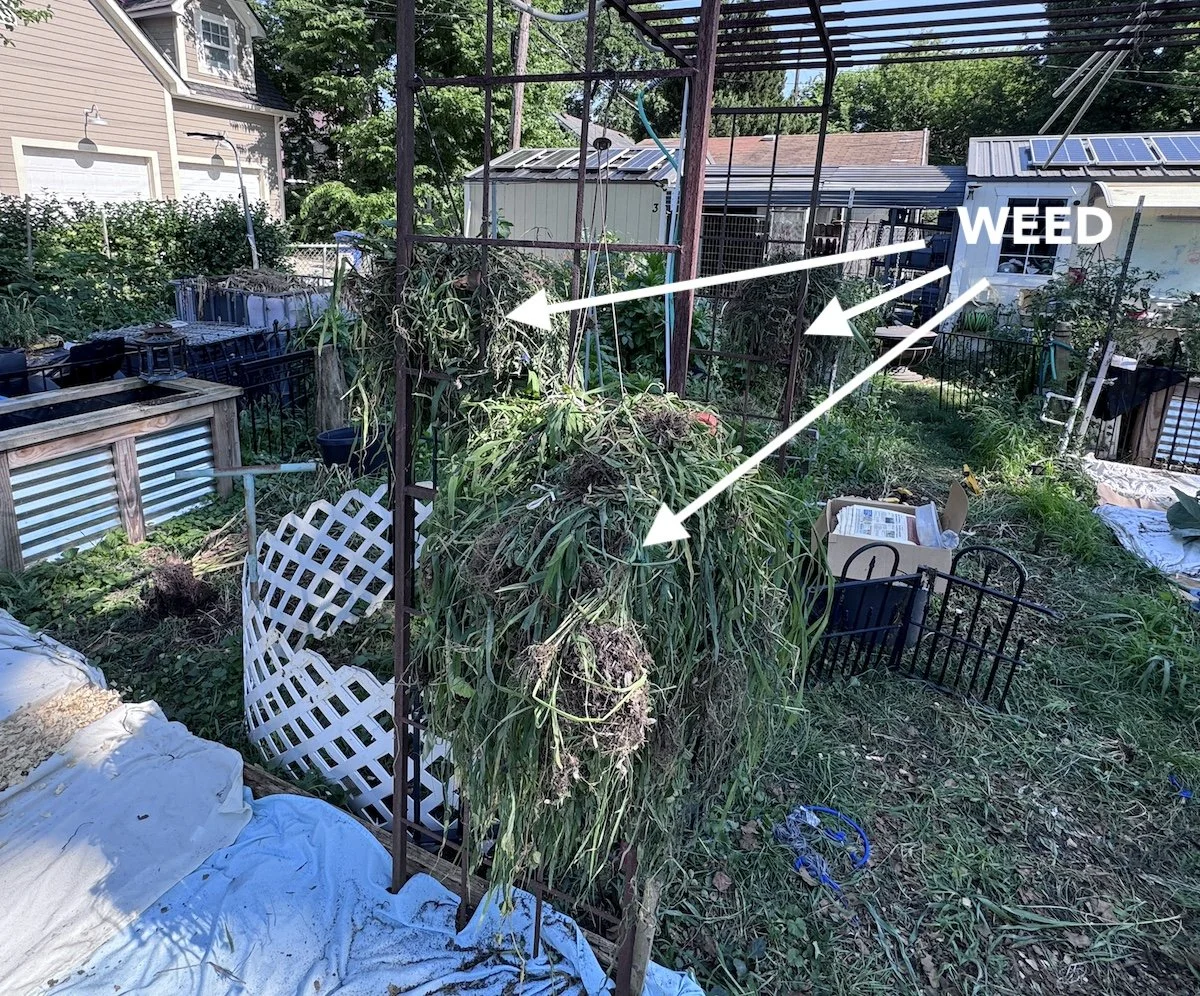
Weeds drying in the summer sun to be processed for feed over fall and winter for the farm animals.
By repurposing weeds in this way, we keep as much as the nutritional matrix of the gardens in the gardens when possible. Leftover weeds are added to compost, or used as bedding for chickens and rabbits. hostile or toxic weeds become phosphorous and potassium in the form of ashes that we use to improve soil quality.
Sustainability starts with acts in the present designed to improve the future. When we neglect tomorrow, our ecology suffers - and so do we. Knowing what’s growing, where, and how, and how to return it to the ecology is an important step in achieving meaningful sustainability.
