

Carbon BioMass on an Urban Farm
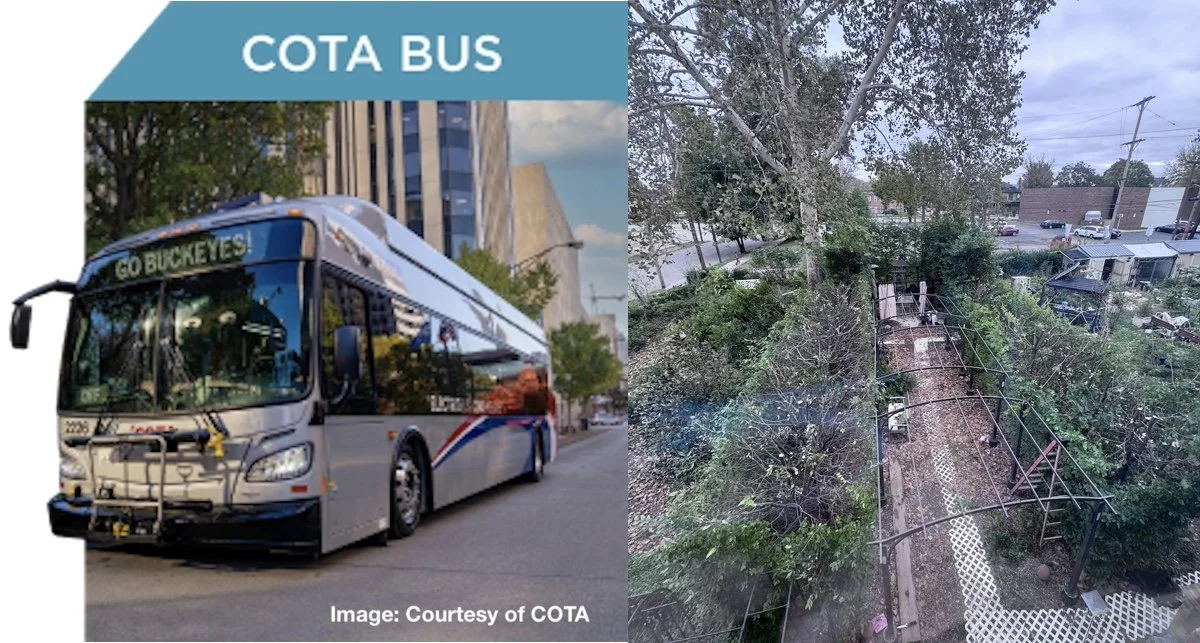
One COTA City Bus in Carbon
Carbon is a valuable resource on this planet. It can be as minuscule as smoke and soot or as massive as a tree. Mezzacello Urban Farm is sustainable in it’s philosophy, mission, and action. This is a blog post about how much carbon biomass on a farm there really is.
The Hornbeam Allee
Of the 9 integrated ecologies at Mezzacello, my favorite is the Hornbeam Allee. The allee was planted in 2017 from 32 cuttings set into prepared beds. Since then and over eight years those trees have grown to 4 meters (16 feet) and expanded beautifully in the middle of the formal gardens. It is quite shocking how much carbon biomass is locked in those trees, their trunks, leaves, and roots.
Nature By Numbers
Here is the simple formula: D^2cm (f) Hm = Green Weight [NOTE: Requires Metric Conversion]
We can plug in these numbers.
Diameter (in cm) of each tree is 213cm (7, o56’ or 588”) x 213cm = 45,522cm
f Factor for a deciduous trees above 12’ in North America is 0.0346 this is a constant
Height (in meters) of each tree is 4m (16’)
(45.522cm) 0.0346 x 4m
Thus, each tree has a green weight biomass of 6,300kg. Each tree needs to be reduced by 1/4 to bring the height to a more manageable 3 meter (10’) height. This will reduce the green mass to 1,575kg.
The Carbon Mass of the tree is a further reduction of a quarter of the green weight. A quarter of that is 394kg (866 lbs) of carbon. Once you remove water, Nitrogen, Magnesium, and Phosphorus this is your carbon weight.
But we are NOT done. There are 32 Hornbeam trees at Mezzacello Urban Farm. Thus the full carbon biomass of the reduced Hornbeam Allee is 12608kg (27,738lbs). That’s four metric tons of carbon. A COTA bus weighs 13,500kg. That is 93% of the mass of a COTA Bus in surplus carbon.

A COTA bus weighs 13,500Kg
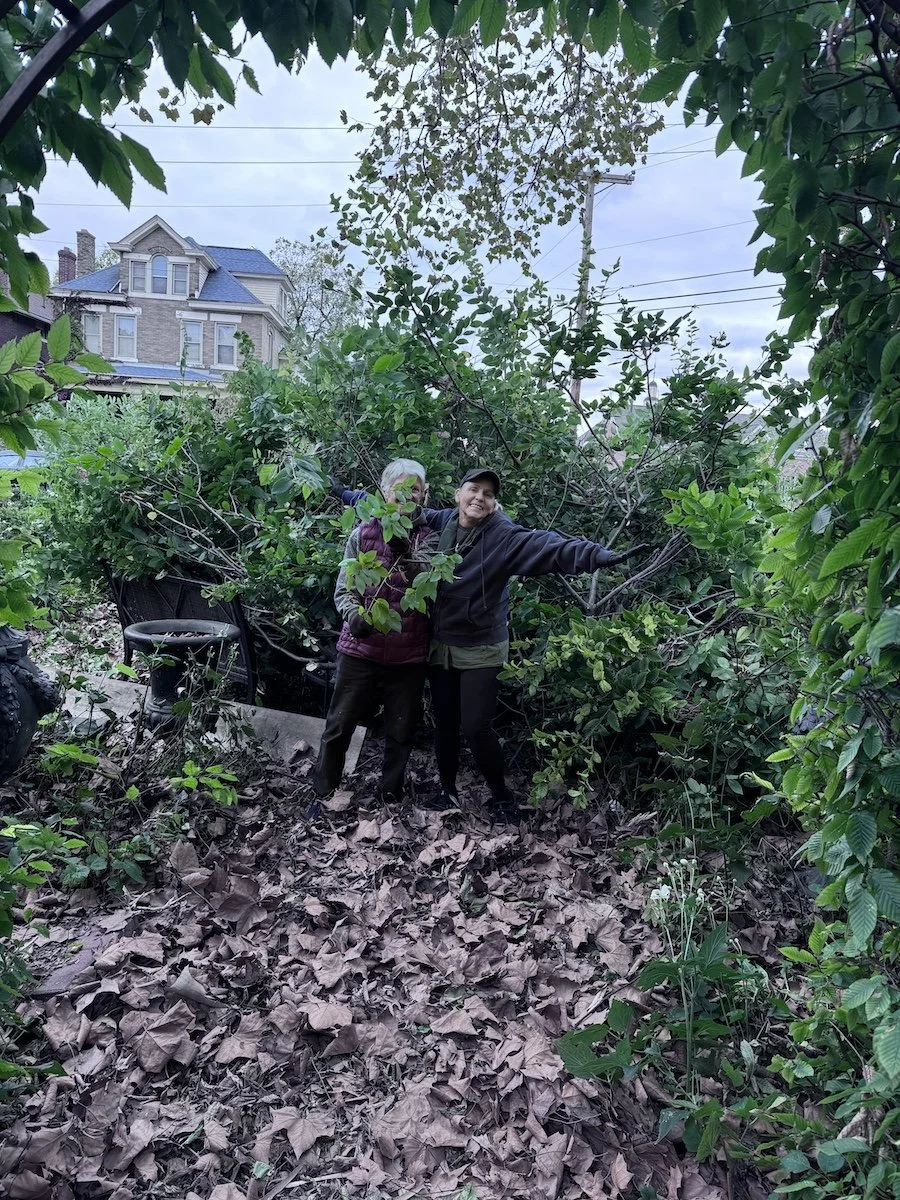
This is what one half of the extra biomass of Mezzacello’s Hornbeams looks like.
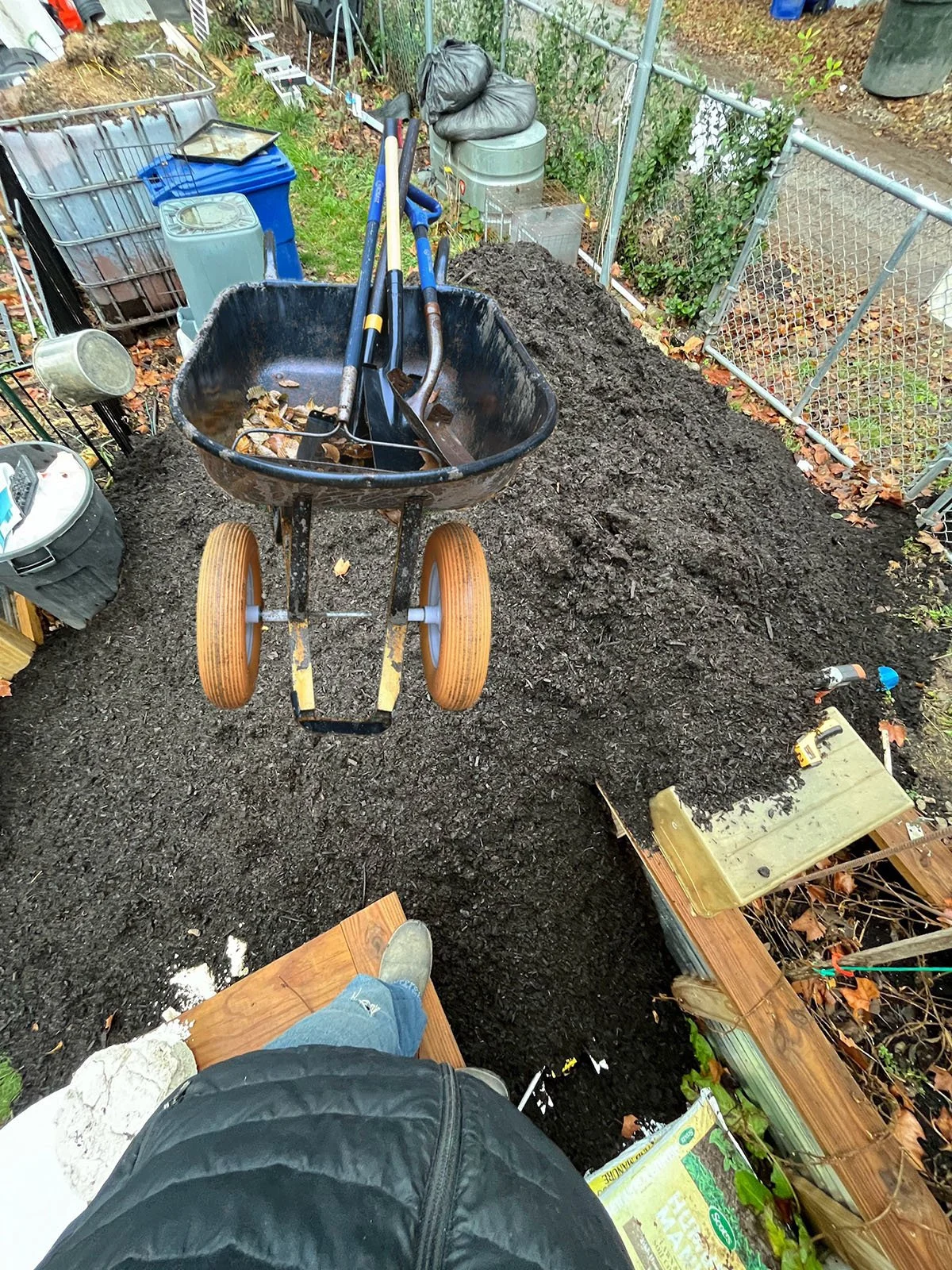
4,500kg of Zoo Brew Compost moved last year
Now What?
Well, nature is a participation sport. last year, I hand shoveled 2 metric tonnes of compost around the farm. This year I am going to have to process three metric tonnes of biomass. Where will it all go?
A good portion of it will go into processing leaves for rabbit feed. Another large portion will go into chunks of wood to be converted into biochar. The last bits will be integrated into Project INCA, next year’s project. More on that later.
For now, I have a date with a chainsaw, a feed pelletizer, and a biochar reactor and a pile of branches 3.5 meters tall in my front yard. If you need me you know where I’ll be.
