

Introducing Project INCA
A Side Elevation of the proposed changes to the potager garden at Mezzacello
A side elevation diagram facing north of the potager garden
A plan view elevation of the proposed terraces of Project INCA at Mezzacello Urban Farm
An example of out of the box thinking at Mezzacello Urban Farm
This winter 2025 I am making plans for an ambitious remodel of the potager, pond, water and carbon sequestration systems at Mezzacello Urban Farm. I call this plan Project INCA (Innovating Nutrient Capture and Adaptation) Here are the basics.
A Proposal To Turn Mezzacello On Its Ear
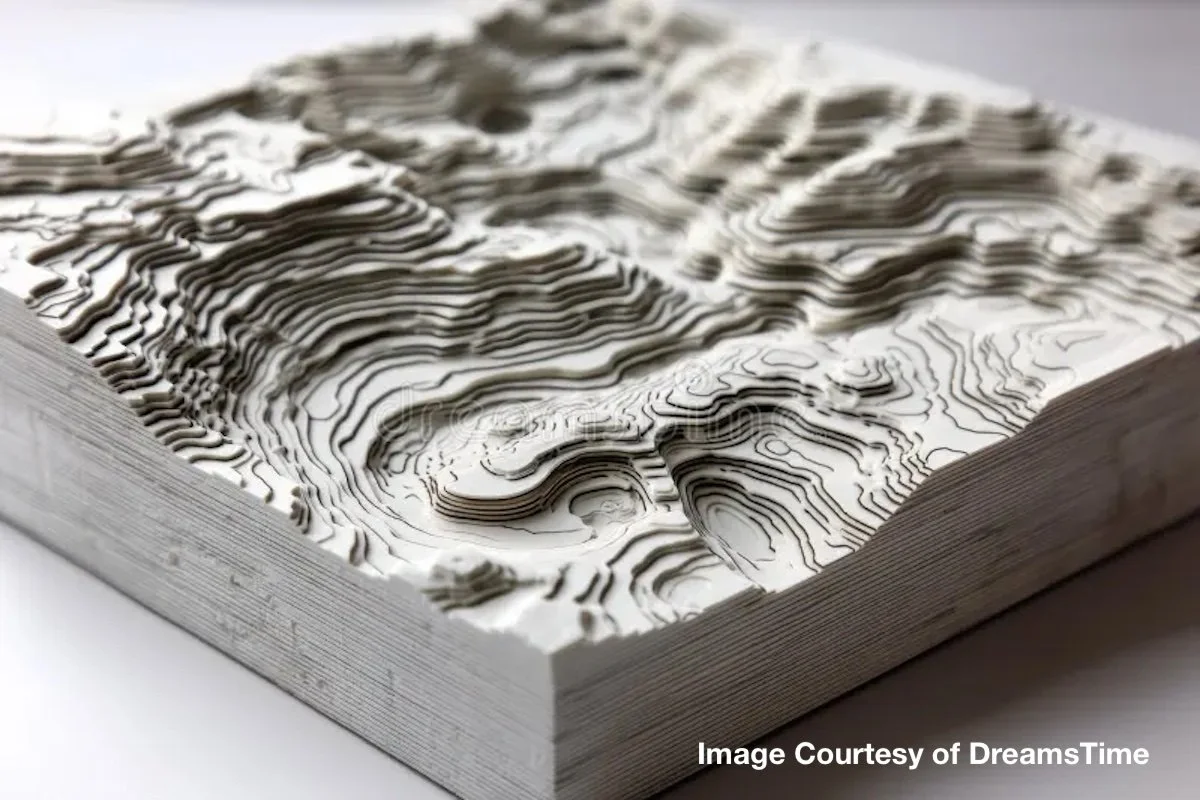
The Farm’s potager garden has been mapped and built in CAD and MineCRAFT.
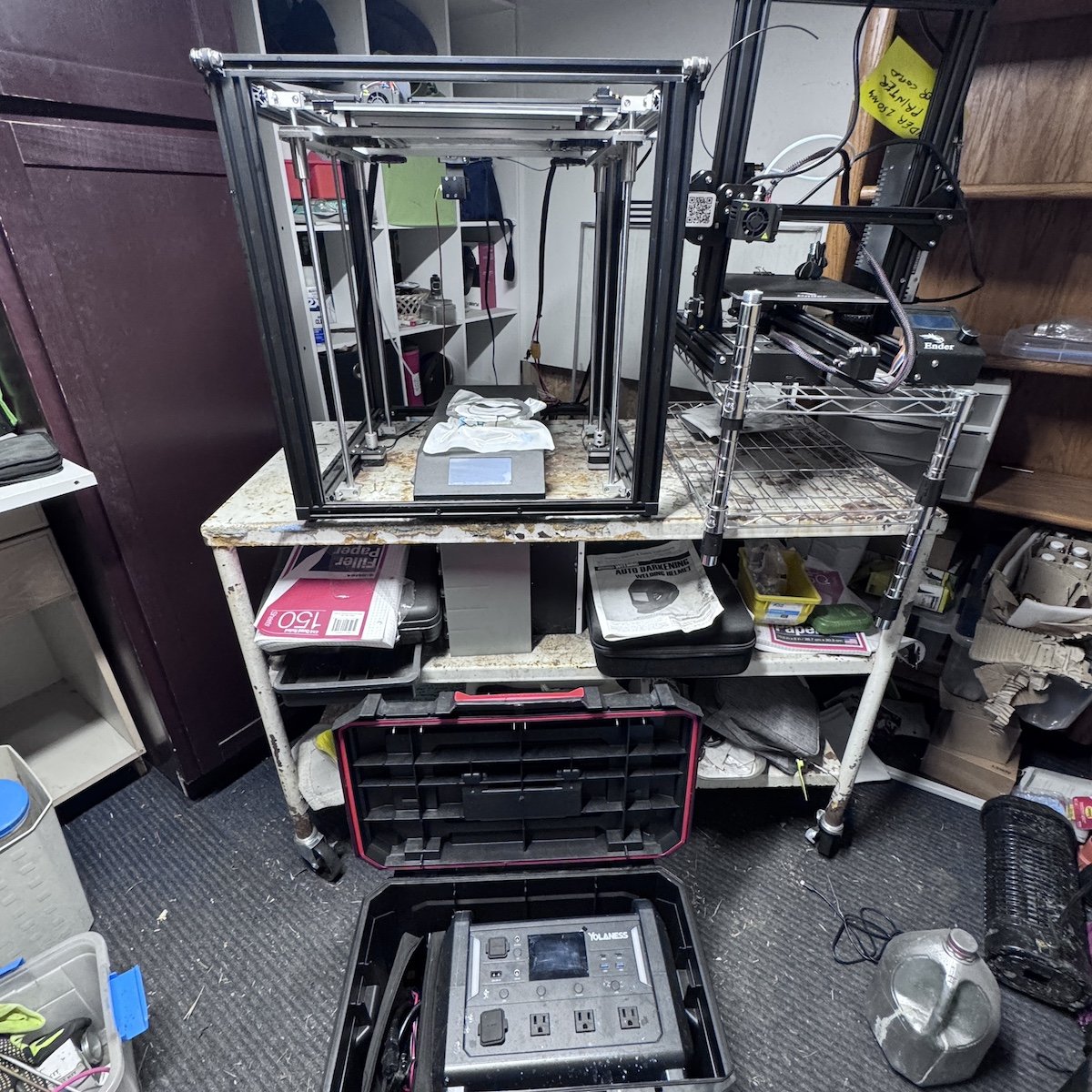
250mm and 400mm 3D Printers
To accomplish this as an educational tool in applied STEM, we will be creating 3D Printed components and laser-cut topographic maps. This will allow us to better explore deeper concepts of the actual grounds modification.
The decision to model systems in 3D and Topographic maps is an important one. In addition to allowing kids to use new tools and CAD skills, it will allow them to interact with their own environment and ecologies. Thise can be created here as well.
The Project INCA Phase I Slides Above
What you see in the slides above is the first draft of an ambitious plan to reduce water use at Mezzacello Urban Farm by 35%. The idea for Project INCA came from two completely divergent sources: The terraced gardens of the sacred valleys in Peru, and the front yard of my neighbor, Blake, two blocks over in Olde Towne East in downtown Columbus, OH.
First, The Inca
The Inca were masters at water optimization and nutrient capture as far back as 1150 CE. Their terraces - a matter of necessity in the Andes - are legendary for their efficiency and fertility. The yards that comprise the southern gardens of Mezzacello Urban Farm also have a geographic and historical legacy: Multiple structures, built, demolished, and abandoned and leaving a depression.
These abandoned structures have left depressions in the ground where the potager gardens are located today (see map). Using data, satellite imagery, and a Terra Rover from a 2024 NASA grant, we determined that the potager gardens slope to the south from the north, and that the very center of the potager is the lowest point of the garden enclosure.
Next, My Neighbor, Blake
Enter my neighbor’s garden here in Columbus, OH. My neighbor, Blake Compton, has been building a love letter house (The CODEX House) to minimalism and sustainability on his property on Oak Street, two blocks away from Mezzacello. The house is a superb blend of practical sustainability, adaptive reuse, and sacred geometry. But it was the front garden that really intrigued me.
The garden sinks in the center. So Blake and his team refashioned the yard into a spiral gravel walkways and terraced design to optimize water from the structures, and to drive water from rain at the summit into swales at the base that capture water. This is what I have done in all of my permaculture beds at Mezzacello Urban Farm, but NOT in the potager.
Even though I have NASA and USGS Satellite data telling me this is the exact topology of that garden, I was not inspired to do anything different with the 24 Project Martian growing beds. Blake’s CODEX House garden shook me. In one night I had a new plan that would make the Potager 35% more efficient and far more sustainable.
Yin and Yang and the Mosquito Menace
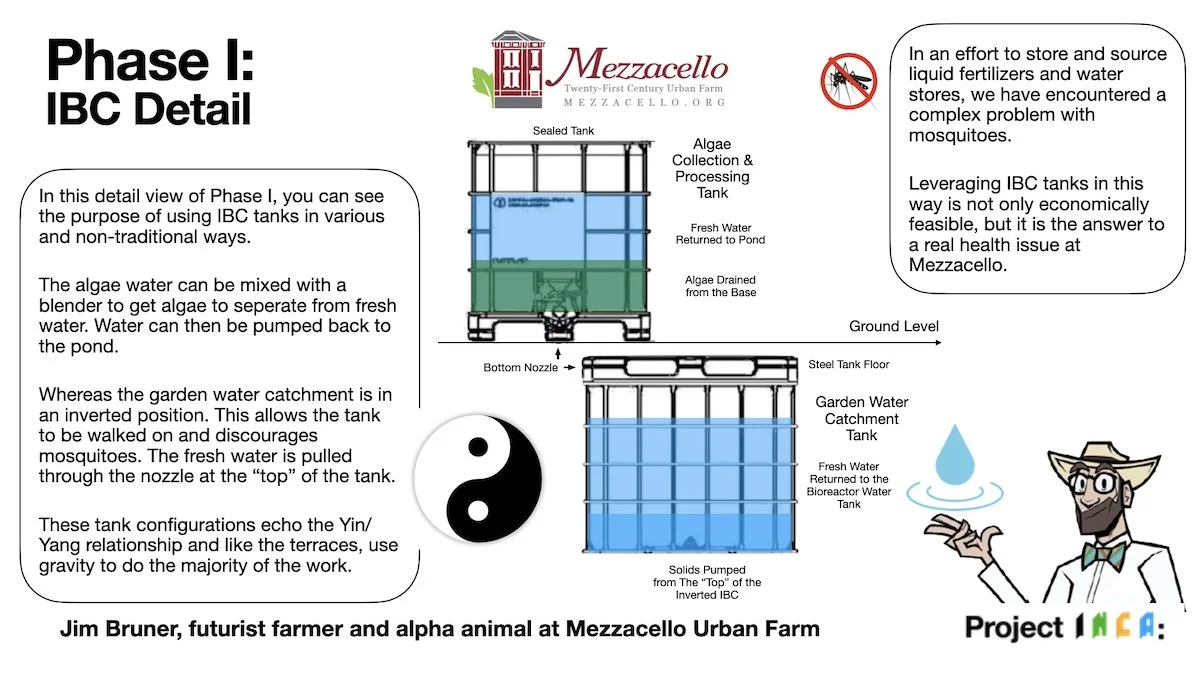
The water catchment and algae capture tanks
My favorite part of the dream inspired by the CODEX House garden (photo below) was the spiral as a machine. In the dream, the spiral would lift up out of the ground revealing terraces above and steps below, and the Japanese Maple at the apex of the spiral literally sank down into the water well that appeared in the center of the garden. This would become the idea of the inverted IBC Catchment Tank.
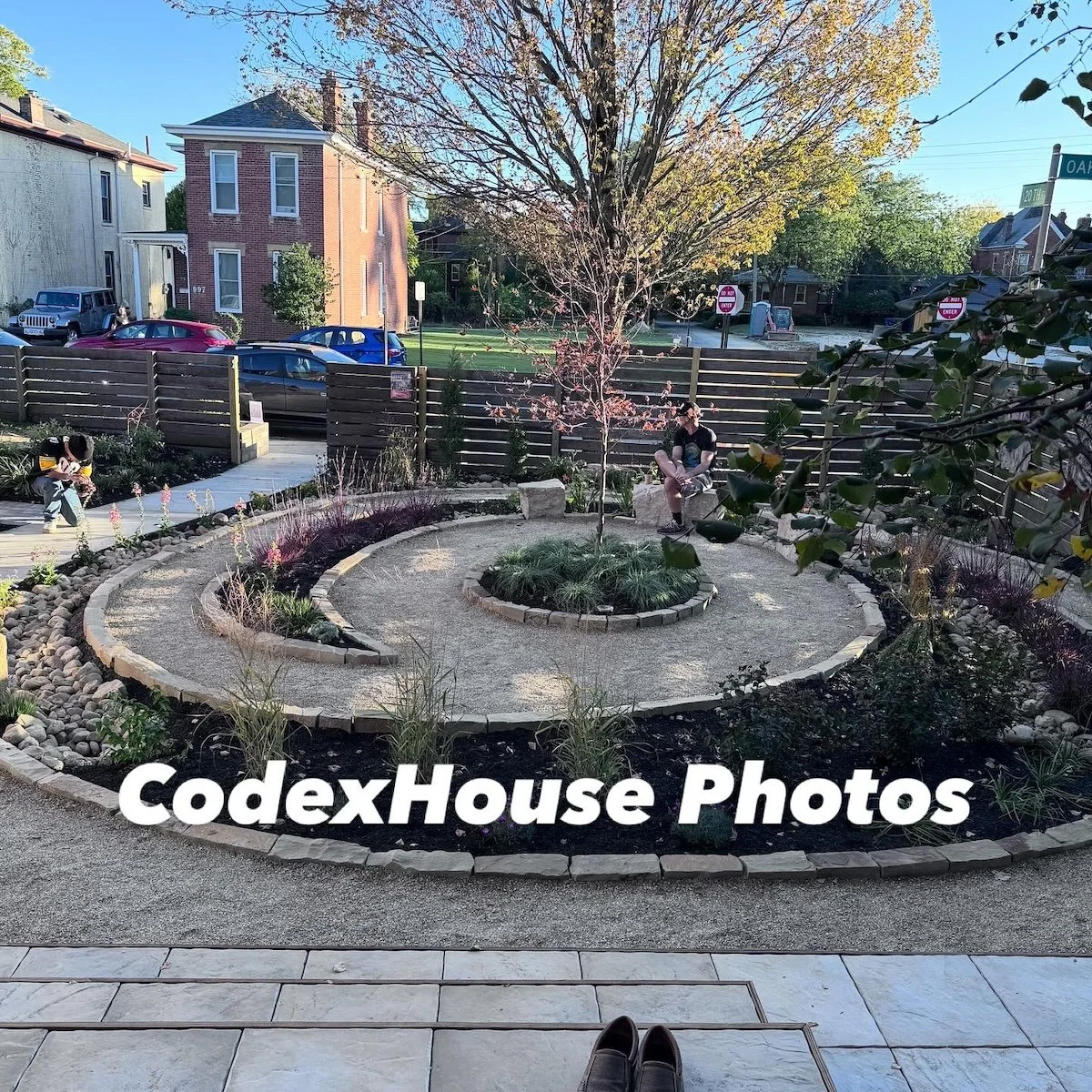
The CODEX House Garden
The functional geometry of an IBC tank is really quite simple. A flat steel base witha steel cage surrounding a 1000L PPE tank. The tank has a built-in nozzle at the base and a screw top on the top. They are designed to hold up to three full tanks above them, so why not just flip it?
By inverting the tank down into the ground, placing a steel grate atop the “bottom” steel cage, the “top” cage becomes the support structure, while the steel base becomes a walkway. The terraces will channel water from the top terrace down to the central walkways. Each edge where the terrace meets the walkway in the central paths will have a French Drain so water will flow down and into the top, now bottom, of the catchment IBC.
Gravity does all the work. The water in the catchment will be automatically pumped out the “bottom” nozzle (now at the top) through PVC tubes embedded in the French drain back up and into the 1000L IBC tank 2.5m in the air atop the bioreactor tower.
This pump already exists and is powered currently with two 150W solar panels. It pumps water into the top tank of the bioreactor, which is pressurized. This tank sends water down to the ground and up to the top of the steel arbor to four rotating sprinklers to completely water all four quadrants of the potager. Everything is automated. The Project INCA innovation is recollect the maximum amount of water for adaptive reuse.
Solids and fertilizers will collect at the bottom of the IBC tank and can be collected and reused by activating a solar-powered solids sump pump to pull solids out of the bottom as needed. The entire system is sealed and closed to mosquitoes. Fresh water and reusable nutrients on demand.
The Problems With Algae Recycling
Recycling algae and ammonia from the pond is a straightforward affair, but introduces a bottle neck and mosquito hazard of its own. Algae water must sit still for two days after it is collected so that the algae can sink to the bottom. Project INCA solves this problem with the inverse of the water catchment strategy.
Collect algae water through the top of the IBC. Using a solar-powered pump, pull fresh water off the top and do one of three things with it:
Purify it for animal reuse
Return it to the pond
Use it to water plants in the paterre gardens
This ensures adapative and sustainable reuse and the water is closed off from mosquitoes permanently. When the water has been siphoned off the top, the algae can be collected through the bottom nozzle and used to synthesize fertilizers like Edens Ghost, Fintastic Fertilizer, BioBlocks, or Charles Chicken’s Fertile Eggs.
Final Thoughts
This will be a big project. I will be tying programming and grants towards this mission in 2025/2026. If you would like to invest, let me know through my website. If you know of a grant that might apply to kids exploring sustainability and systems integration and food security, let me know that too! And many thank to Blake Compton for allowing me to sneak in and fanboy on the CODEX House all summer.
