
Mezzacello Urban Farm In a Nutshell
Mezzacello Urban Farm In a literal nutshell
Most people wonder why we call our urban farm “Mezzacello”. It’s because it was to be modeled as a 21st Century version of Thomas Jefferson’s experiment at “Monticello”. However, with no resources or real farm experience the best we could ever do would be “MEZZA-cello” and like that, a name was born.
This is our fifth year as a non-profit and our 10th year as a farm. We are at an inflection point and we need to focus on future growth. Here is the data about Mezzacello Urban Farm you should know.
Private Residence with an 1868 Italianate townhouse and two adjacent vacant lots to the south
A 501(C)3 non-profit charged with educating the general public with skills, experiences, and resources for creating food, resources, and energy
A hybrid entity that operates with a model of private personal property, a public non-profit, and public sharing of resources, skills, and trainings
Eight The plan view of Mezzacello Urban Farm ecologies that are unique, enclosed, and deeply integrated into a model of sustainability we call a “food oasis”
Gardens, livestock, a pond, trees, traditional farm equipment, composting, and pollinators, robots, automation, renewable power systems and water purifiers
4 STEM labs (livestock, energy, bioengineering, and biochemistry) that are fully stocked, research stations, mobile data access and sharing, livestock exploration
4 Mobile Labs for outreach (Data, Livestock, Bioengineering, and Chemistry)
100% renewable power(Solar, Wind, Batteries, and Mechanical), as well as rain and grey water reclamation and purification stations
Courses, design challenges, and camps that cover everything from quantum effects in nature to how to hatch a chicken egg
Robust, open-source, and inclusive library of design challenges, blogs, and resources online at Mezzacello.org
Leadership from the founder with 21+ years experience in design, engineering, education, STEM, invention, mentorship, and data science backgrounds
Leadership Academy designed to train young people in the art of leadership and the practical, social, and emotional logistics of leadership
Integrated leadership built from students who loved the coursework and given the opportunity to learn, train, and teach took that leap and became “MenTerns” (Mentor + Intern)
Proven track record and balance sheet that reflects seven consecutive years of consistent resource production and closed loop sustainability from systems in use here at Mezzacello Urban Farm
80% of the systems in use here at Mezzacello Urban Farm were designed, built, tested, and modified by studenst and MenTerns in our robust and hands-on summer camps and workshop experiences`
100% of the systems developed here at Mezzacello Urban Farm has been use-tested through 18 months and documented for success fail
30% of those unique modifications that are 100% student led have persisted and expanded here at Meezacello Urban Farm
4,300 unique students have been enrolled, engaged, and inspired in our Summer Camps, Workshops, Community Outreach, and School Visits since 2017.
18 Middle School MenTerns (Mentor + Intern) have been trained and tested in teaching summer camps and workshops since 2024.
Phase IV expansion of the 1868 house kitchen and added a public ADA accessible restroom began in 2024. Theaddition of a deck with a covered, enclosed room intended to serve as a 4 season sustainability lab and data center. The majority of this was funded by a personal HELOC.
DOGE canceled three awarded Federal Grants in 2025, resulting in a $75K shortfall
10 Summer camps are planned for 2026 ranging in topics from creative reimagining of the farm, to vet tech, invention, water resources, renewable power, ecology, genetics and chemistry, soil technology, recycling, and sustainability
PROS and CONS
PROS
Integrates agriculture, ecology, energy, and sustainability from the past, with the present, and extends it into the future
Open-source model, lessons, and accessible mobile labs available for any community to implement and replicate
Fully sustainable as a standalone model for subsistence and resources
This does NOT include grains, dairy, or pork/beef as those products and livestock are not accessible due to public health regulations
Fully commited and prepared to innovate and adapt to changing climate, demographic, and economic crisis
CONS
Non-traditional and not an easy sell to investors
Private residence and public non-profit model is a hard-sell to investors and banks
Lack of funding and public awareness hampers our ability to grow and invest in innovation and outreach
Unfortunate reliance on a grant-funded economic model was destroyed by DOGE (-$75K in 2025)
No funds to sufficiently advertise or promote our model and programs
No real awareness of Mezzacello Urban Farm because it is located in downtown Columbus, OH
People expect farms to be in the country and overlook the real and demonstrable impact Mezzacello Urban Farm has had in 10 years
Mezzacello Urban Farm believes it is counter-productive to take urban kids out to the country, observe, and then return to a food desert ready to apply new ideas
Building a dream whose time has come - alone - has been financially destabilizing
Who, Why, What, How, and When
WHO:
Mezzacello Urban Farm was started in 2015 by Jim Bruner and Richard Riley. In 2015 the two began converting the abandoned property and adjacent empty lots into functional gardens and structures and rehabbing the 1868 house which had stood empty for 11 years. This would result in the creation of a formal garden structure in the east half of the garden, and an urban garden structure in the west half.
The house has been mostly renovated and has been featured in the Olde Towne East Tour of Homes twice.
The goal of blending the gardens with the house was to build a model for practical sustainability in the middle of a densely populated and built urban environment. Special attention has been paid to soil regeneration, enclosed ecologies, and permaculture.
It is this mandate of returning the adjacent land back to 1868 soil substrates and ecologically vibrant prairie/garden states that motivates our systems integration and garden designs.
OUR WHY:

The plan view of Mezzacello Urban Farm CLICK the Map for a Virtual Tour
Mezzacello is a love letter to gardening, wellness, science, education, and sustainability. The south-facing gardens were designed to serve as an urban garden for the purposes of beauty and leisure. It was a haven during the COVID19 Lockdown of 2020-2021. It was then that the owners realized there was so much more that could be done with Mezzacello.
COVID lockdown did not carry the stressors that others were reporting, We realized we could and should share this opportunity we’d built. Bruner’s background in STEM education seemed an obvious place to start, so We started offering summer camps and workshops through spring, summer and fall.
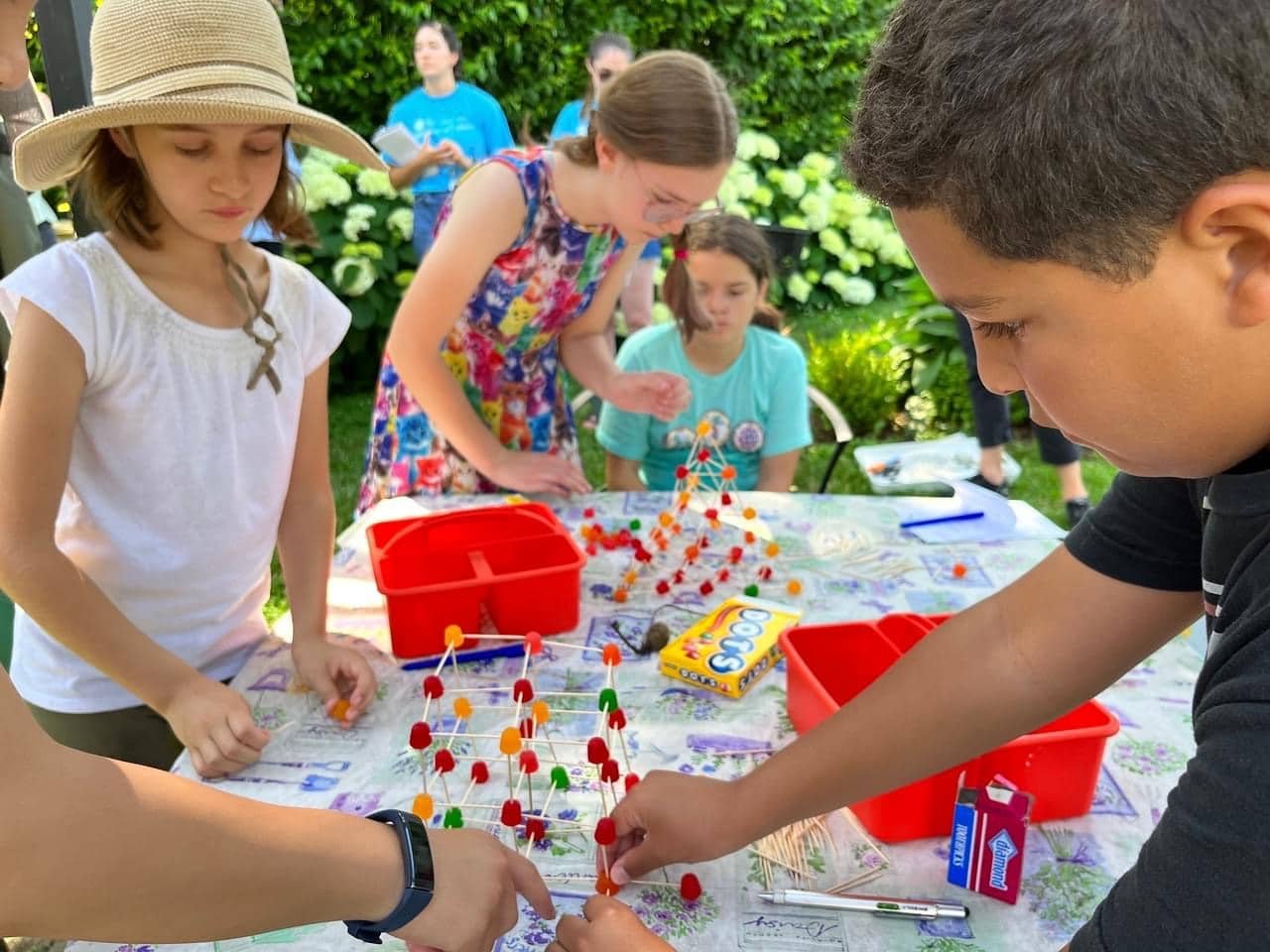
Te first summer camp at Mezzacello, Project Mission to Mars
After COVID lockdown was lifted Mezzacello Columbus, LLC was formed as a 501 (c)3 non-profit. We launched our first summer camp in 2021, “Mission to Mars” that summer. We continued to run programming as a program of the PAST Foundation until 2022. You’ll learn more about this in the How, What and When sections.
Why Food, Nutrition, Sustainability, and STEM Became So Vital
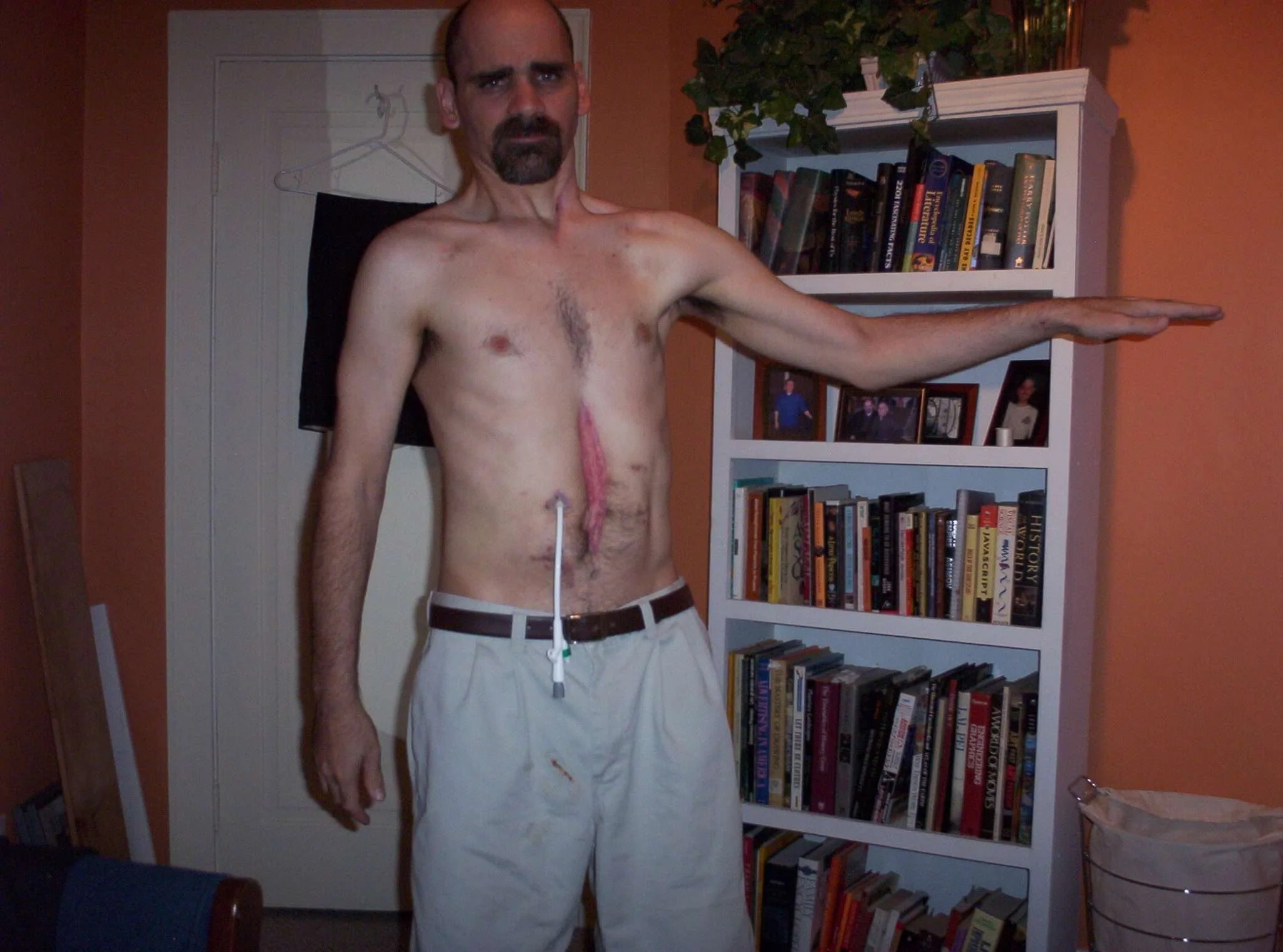
The feeding tube years
Mezzacello and it’s urban farm was originally an existential response to a major medical condition. Mr. Bruner does not have a functional esophagus. In 2004 a genetic immune response disease began to destroy his esophagus. In 2007 his esophagus exploded and was removed and in its place a feeding tube was installed through his abdomen directly into his stomach. This was the sole source of nutrition for almost five years.
To facilitate swallowing, a fistula (an artificial access hole in the human body) was left in his throat to allow saliva to drain. Sanitary napkins were worn over the fistula to collect saliva. This is why Mr. Bruner wears a bowtie to this day. In 2009 the Cleveland Clinic rebuilt his esophagus using his existing stomach. Food was on the menu again. There was a catch.
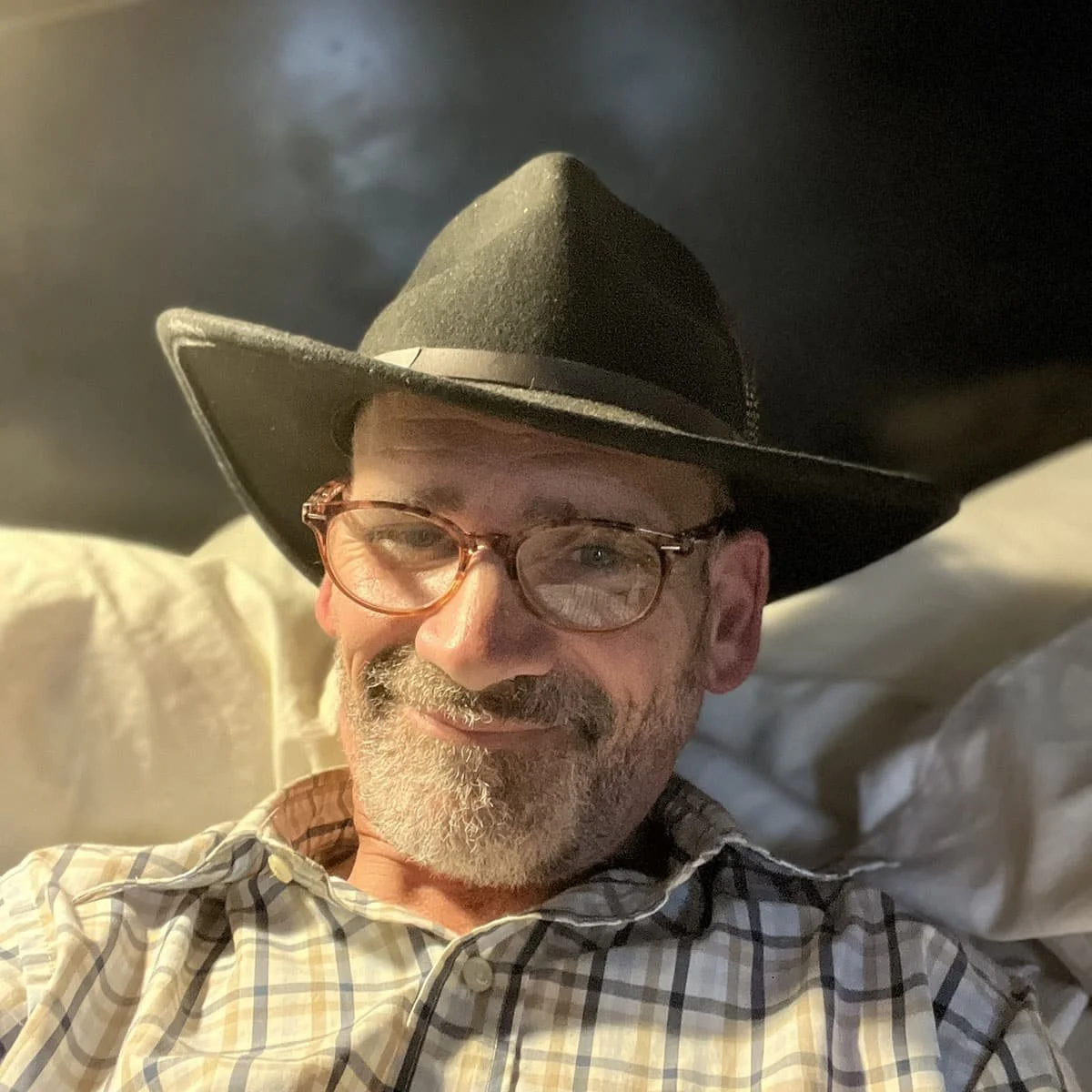
Digesting and dreaming
As a result, Mr. Bruner cannot eat processed food. No fast food, no sugars, no greasy foods. Fresh food without sugars or added fats are a dietary requirement. Fresh food is an expensive luxury.
In addition to the fresh food control, Mr. Bruner must lay flat for 30 minutes after every meal of solid food, as the modified vertical stomach will not process food unless it is made artificially horizontal. The condition is called “Dumping Syndrome” and is common with people who have had baryatric surgery.
The two years lived with a medical feeding tube between 2007 and 2009 gave Mr. Bruner extraordinary insight into the way the average person interacts with food. Watching what other people eat while one cannot as a past time allows one to see patterns and reflect on them.
HOw the Amish and STEM met up
A promise was made that if the opportunity to eat solid food ever returned, Mr. Bruner would commit himself to teaching others how to best optimize the creation of food, resources, and sustainability.
Mezzacello Urban Farm is that response. From 2015 to 2026 Mrs Riley and Bruner have been building the future of localized sustainable agriculture and applied STEM innovation. This project started with the initial 2014-2015 interviews with the Amish community. Two families agreed to allow Mr. Bruner access to their farm for a few hours to observe and ask questions with pencil and paper only.
That data was then turned into the blueprint for a deep integration of traditional sustainability and STEM systems thinking. After COVID19 Mezzacello Urban Farm adopted a strategy to integrate all 17 of the UN 17 Sustainable Development Goals and began working as a program of the PAST Foundation to offer STEAM-Based outdoor programming.
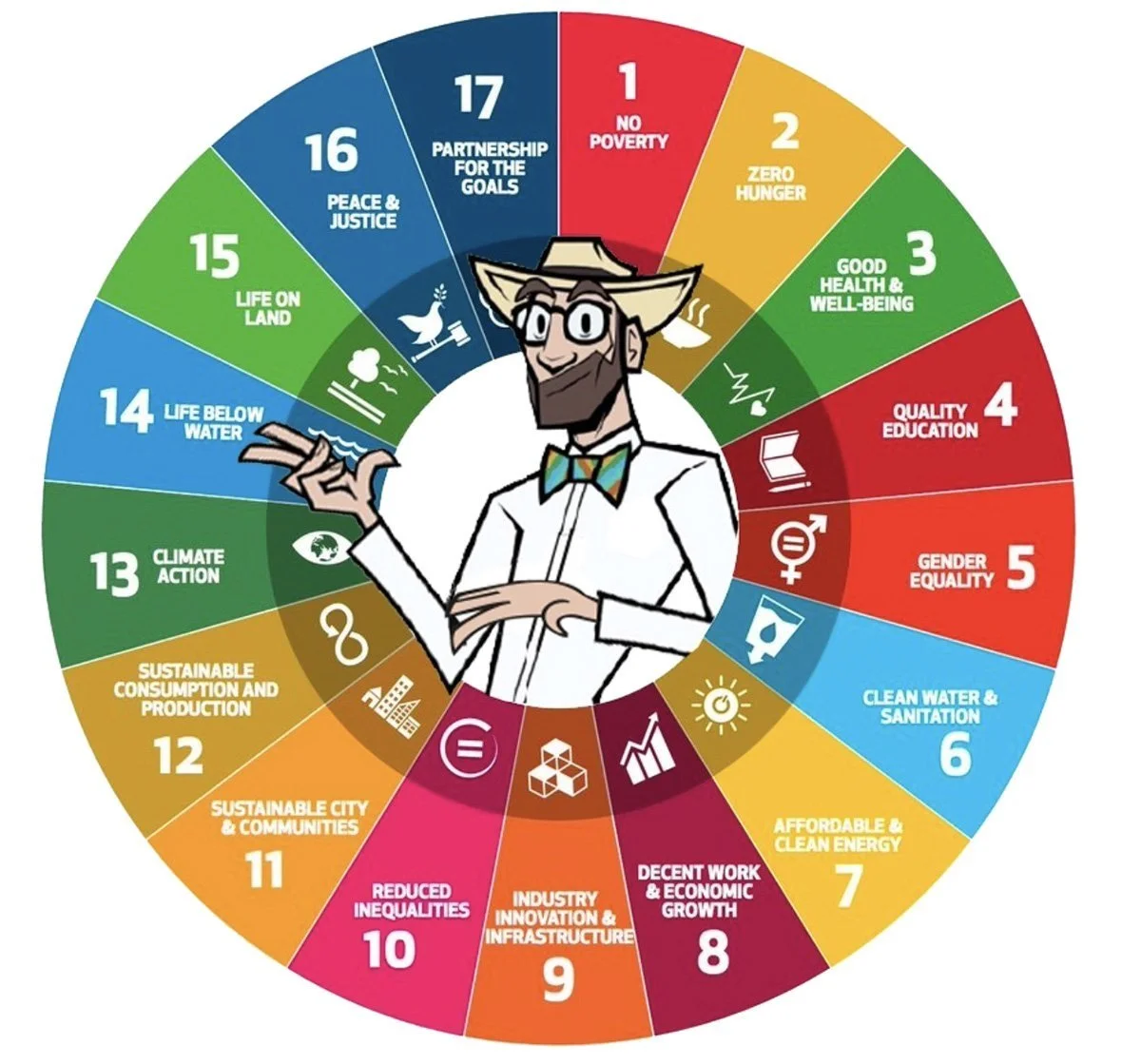
An image from an online presentation on the UN 17 SDG implementation at Mezzacello Urban Farm
Mezzacello Urban Farm was purpose-built to grow, maintain, sustain, and explain life, wellness, and career readiness for kids, families, schools, and our community. And it’s the kids that are helping to realize this innovation.
The fact that nearly all the tech at my downtown campus was imagined, designed, engineered, built, tested, observed in use OVER a period of 18 months, and improved on every year is our greatest pride. We deploy, use, test, and gauge these systems, devices, and and methods daily and through seasons. Then We report on them via my blog.
Let’s Talk About The Kids and Why They Are Important
Every year we add a new innovation or strategy for achieving sustainability at Mezzacello Urban Farm. Each year since 2017. This ramped up when we started offering summer camps. It is a passion for us, and we know kids need to understand food, nutrition, and STEM and we know they learn best through play.
The Outlier Kids
Every season we had kids who just “Got” it. They had passion, talent, and interest in the topic. In 2021 we introduced high school interns to help plan programming. In 2023, we introduced middle school interns to help with the camps. Both of these programs were well received.
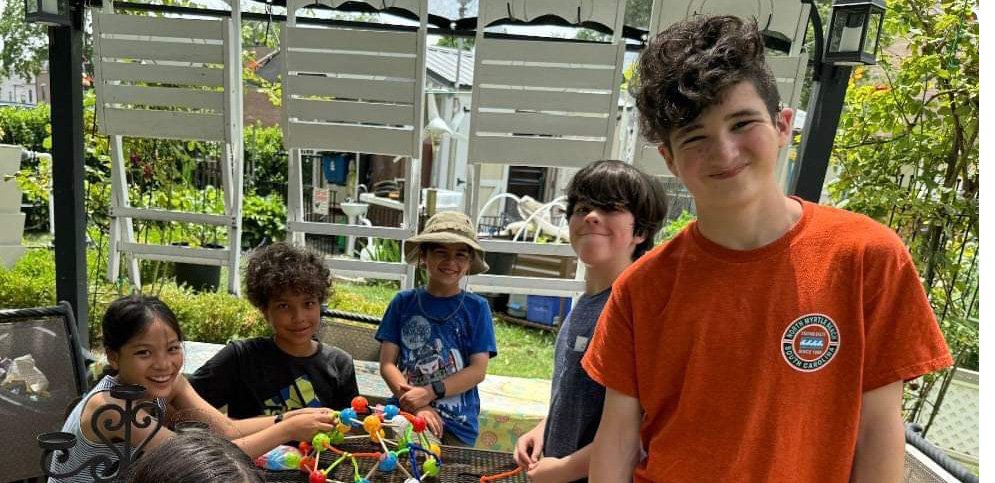
The MenTerns 1.0
In 2024, we soft-launched the “MenTerns” (Mentor + Intern) program with six students. These students were purpose-trained to co-teach with Mr. Bruner and the Teacher of Record at Mezzacello Urban Farm. That was a success. And the system was well-received by kids and parents alike.
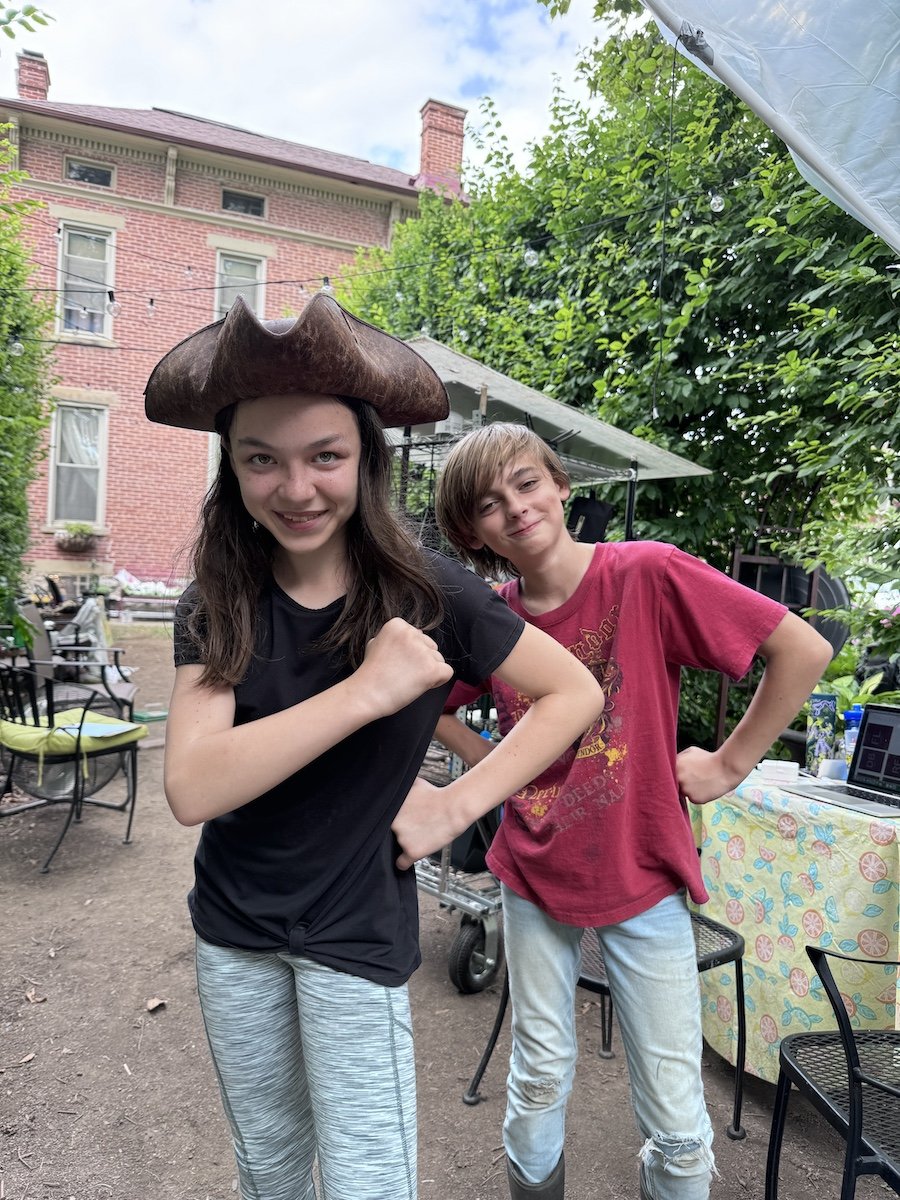
Two Pirate MenTens
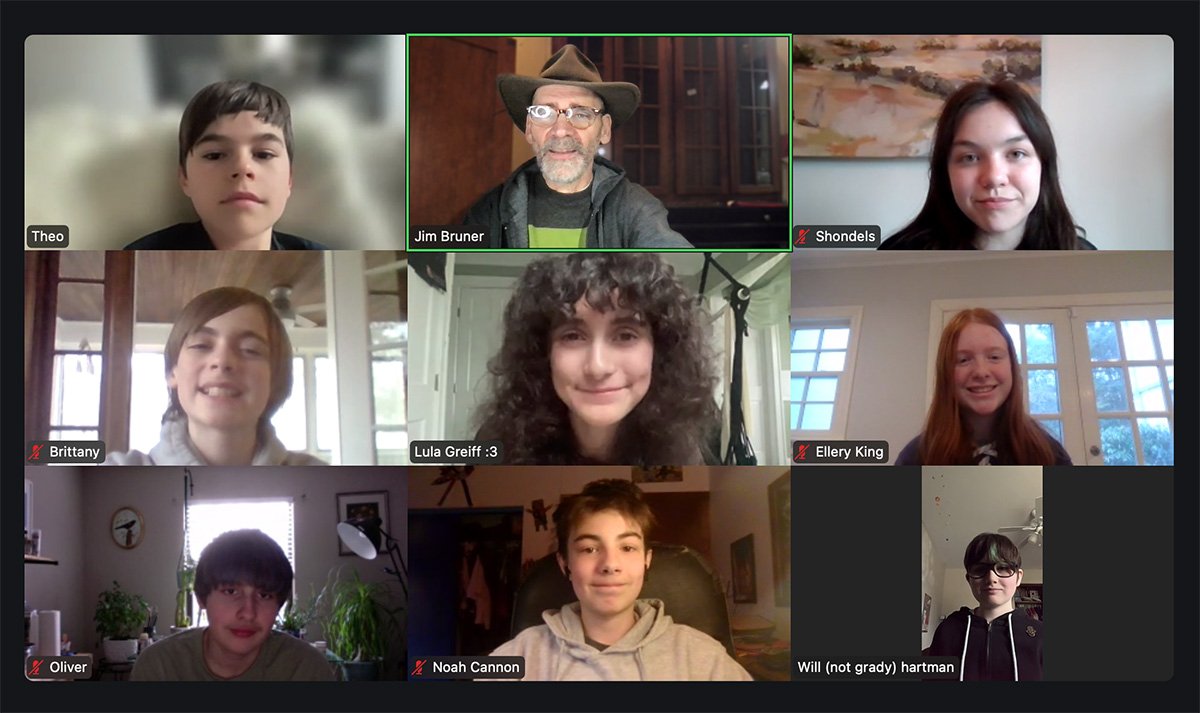
One of the online MenTern training Sessions
In 2025 we were launched an OFFICIAL MenTern Class. Trainings had taken place and camps had been assigned when we heard from DOGE in late March. Rather than cancel the project, we perservered and the MenTerns were a great success.
The MenTerns trained in good faith. In return they attended camps for free, got real-world leadership and STEM experiences and were eligible for Ohio Means Jobs Career Readiness Certificates. Plus, the kids at the camps were mind blown that kids LIKE THEMSELVES could be the leaders we needed. It made other kids believe in themselves and want to try it too.
I will never regret moving forward with the MenTern program. My executive board disagreed, but they allowed me to run the program as long as I paid for it. This is what the world needs more of and I agreed. I am in debt, but I think the world is the better for it.
WHAT:
In 2021 Mezzacello Columbus, LLC was created to serve as the non-profit business unit for converting the formerly abandoned and overgrown vacant lots at 33 North 20th Street, Columbus, OH 43203 into the urban farm. It would become a non-profit business and Farming STEM R&D Lab in 2022.
The goal of this business was to extend the casual research and tours that had been taking place at Mezzacello in its partnership with The PAST Foundation. We saw a need and a niche that needed to be filled.
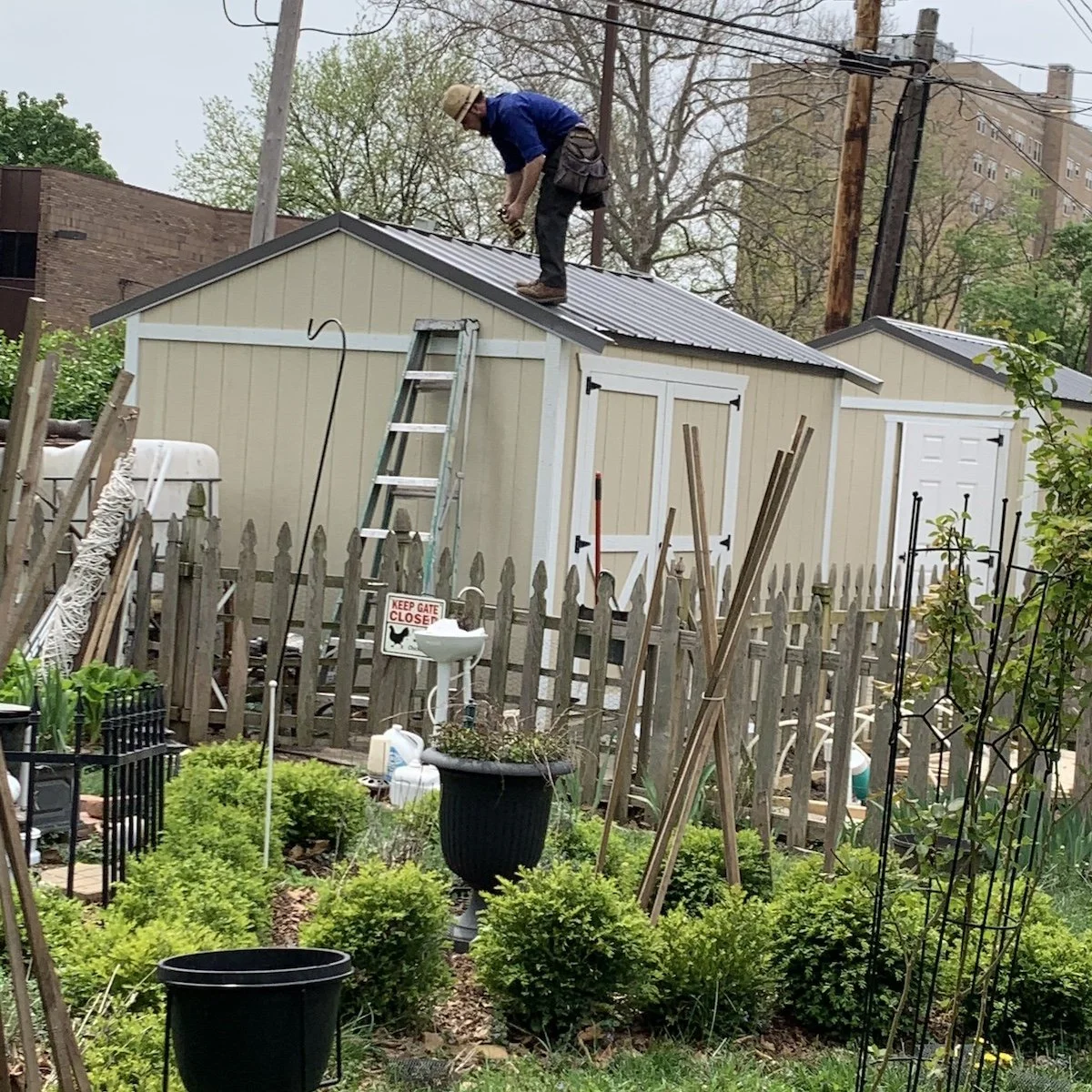
The sheds being built by transported Amish men
Mezzacello Columbus, LLC. was awarded a 2021 Ohio Farm Bureau Foundation Careers in Ag $50K grant. With this grant, the gardens were refactored and foundations were created for the installation of four sheds that exists today.
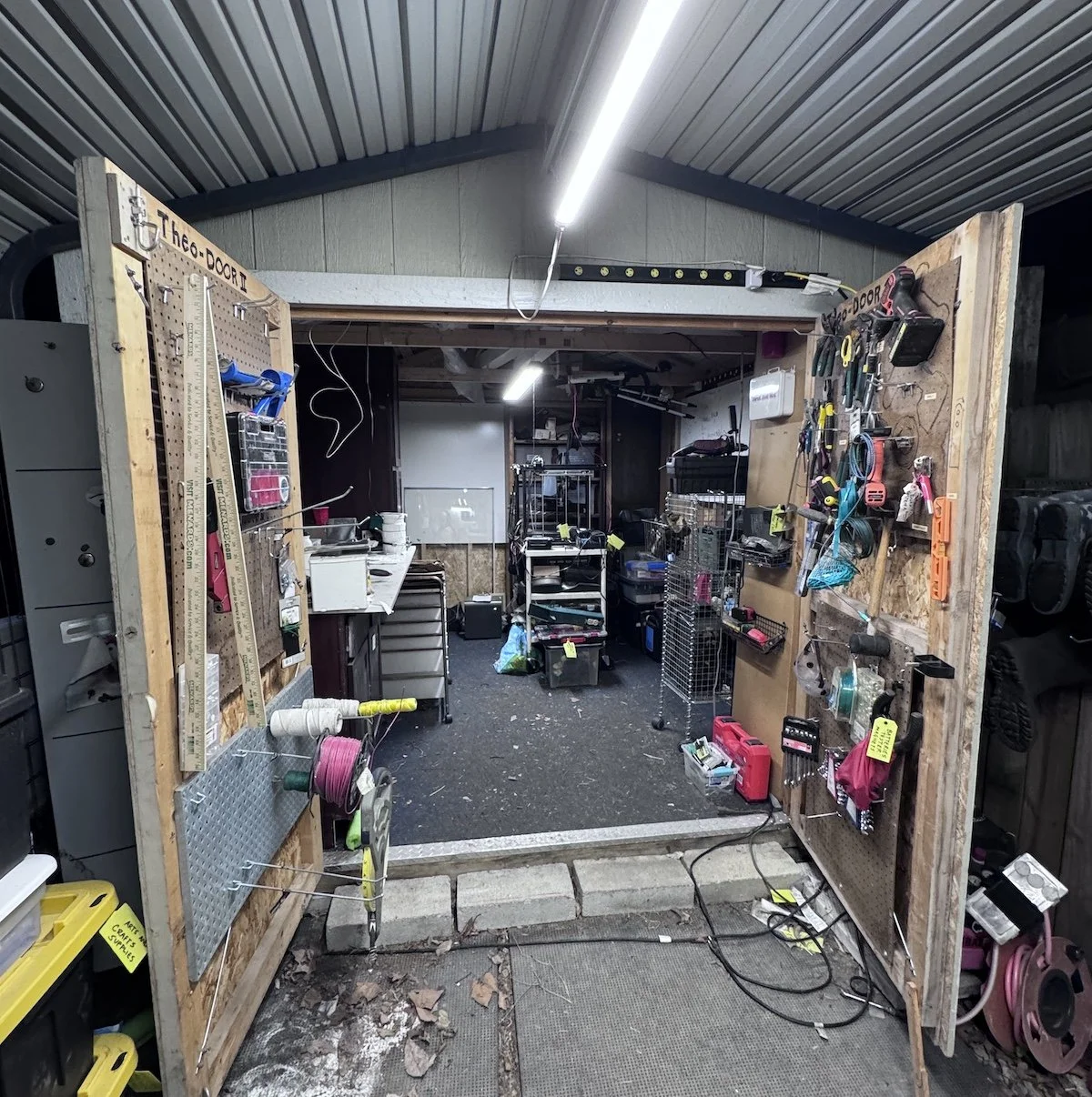
The Bioengineering Lab
These four sheds serve as livestock, energy production and tool storage, bioengineering lab and biotech and portable kitchen. During 2022 and 2023, 24 solar panels, four vertical axis wind turbines, and 12 12V LiFePO betteries were installed and the farm went off-grid. in 2024, the biodome was built and deployed.
In 2024 a loan was obtained to rehab the house at Mezzacello and add an attached classroom that would create an enclosed data lab and allow access to the kitchen for cooking classes. Major renovation was started and the sustainability lab was to be covered by three Federal grants.
In 2025, $75K in awarded grants were canceled as a result of DOGE cuts. This severly limited the operational capacity of Mezzacello Columbus, LLC and Mezzacello Urban Farm. Work on the attached sustainability lab halted as a result. This has hurt Mezzacello Urban Farm severly as there are now no resources to advertize, partner, or grow programs.
HOW:
Mezzacello Urban Farm runs Farming STEM programming that is tightly integrated into the original mission of grow, maintain, sustain, explain. All programs (summer camps, workshops, community presentations, shool outreach events, and online presentations) include a component of animal integration, vegetable integration, STEM integration, and a youTube record or live presentation of either proof of concept or of understanding and mastery.
Mezzacello Urban Farm is unique in its methodology of applying Amish principles of sustainable agriculture, traditional farming techniques, and soil development and 21st-Century technology and STEM-powered career readiness integration. Attendees to our programs get a unique insight into what we refer to as clean hands integration and dirty hands experiences.
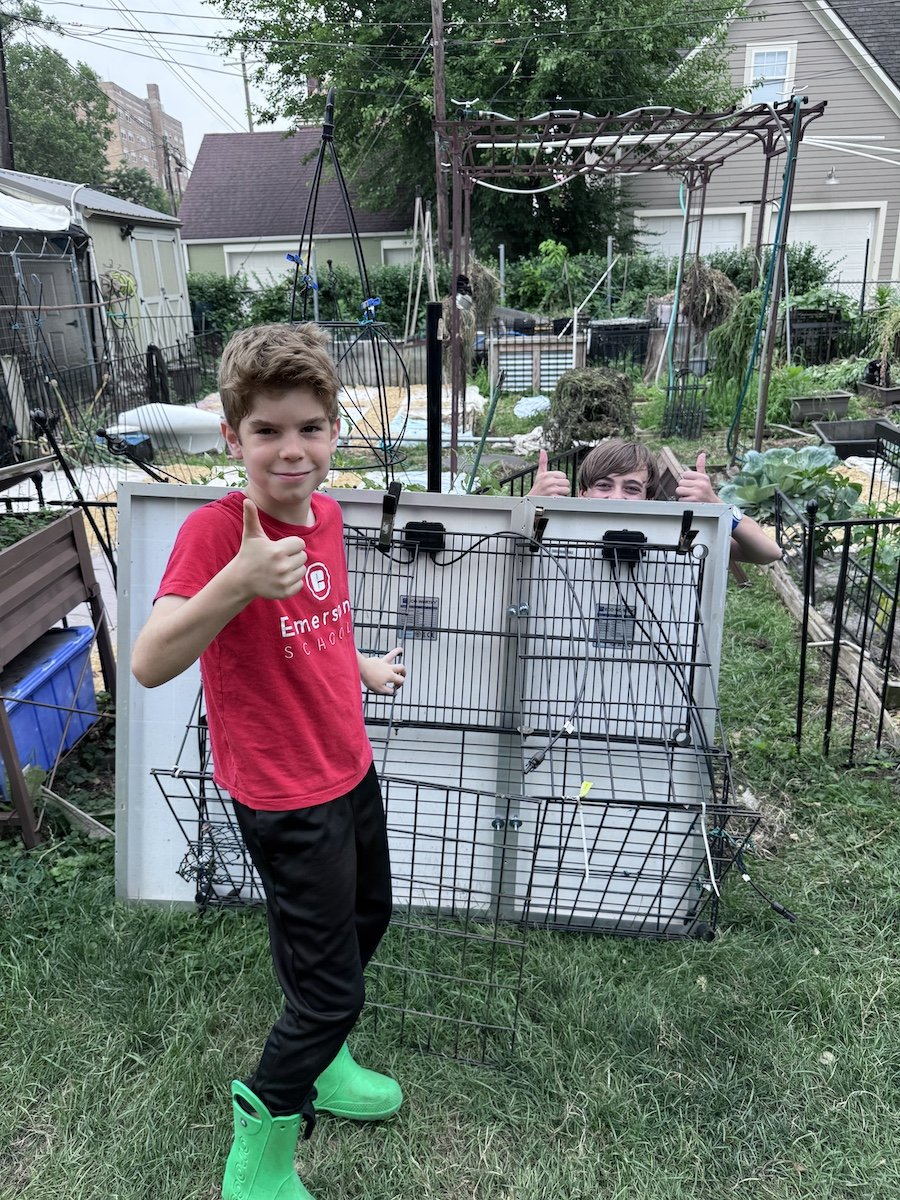
There is a MenTern hiding behind that solar array!
All programs feature automation, robotics, purification, energy renewables, and data science AND soil biology, water and soil recapture strategies, animal and vet tech science, gardening, composting, and fertilizer synthesis. Both tracks are necessary to fully embrace, recognize, and react to the levels of sustainability we need to achieve as a society in the 21st Century. See The Equation for Sustainability
All of this started as a response to a severe health crisis. Bruner applied degrees in Industrial Design, Data Science and programming, and 25 years of STEM Education, mentorship and work in the youth invention and science fair spaces. These experiences inform and extend the mission to empower youth to invent and deploy programming to automate and apply STEM to these simple natural systems.
WHEN:
We realized that kids were desperate to understand health wellness and connection. We also saw that they needed career pathways and access to STEM experiences - especially in at-risk, food deserts and urban environments, like my neighborhood. Summer Camps, School Presentations, and Workshops remain our primary source of education and outreach.
Our Sustain | Ability Summer Camp Header
The urban farm has been deeply hampered by a loss of funding and lack of brand recognition and market penetration. The failure to complete the Sustainability lab attached to the house was a blow. That would have allowed us to extend programming into the winter and into evenings.
Now there is a robotic side yard that also produces food, collects and purifies water, safely integrates livestock, insects, bacteria, and manures. Carefully managed and processed manures, composts, and synthesized fertilizers are created to automagically create strong, vibrant, and fertile Amish soil.
Our systems include sterilization and washing stations for boots and hands, UV sterilization of hands and digital equipment and tools. Sterile boot baths are in place and rubber boots are provided to manage H5N1 outbreaks and regular H5N1 testing is done.
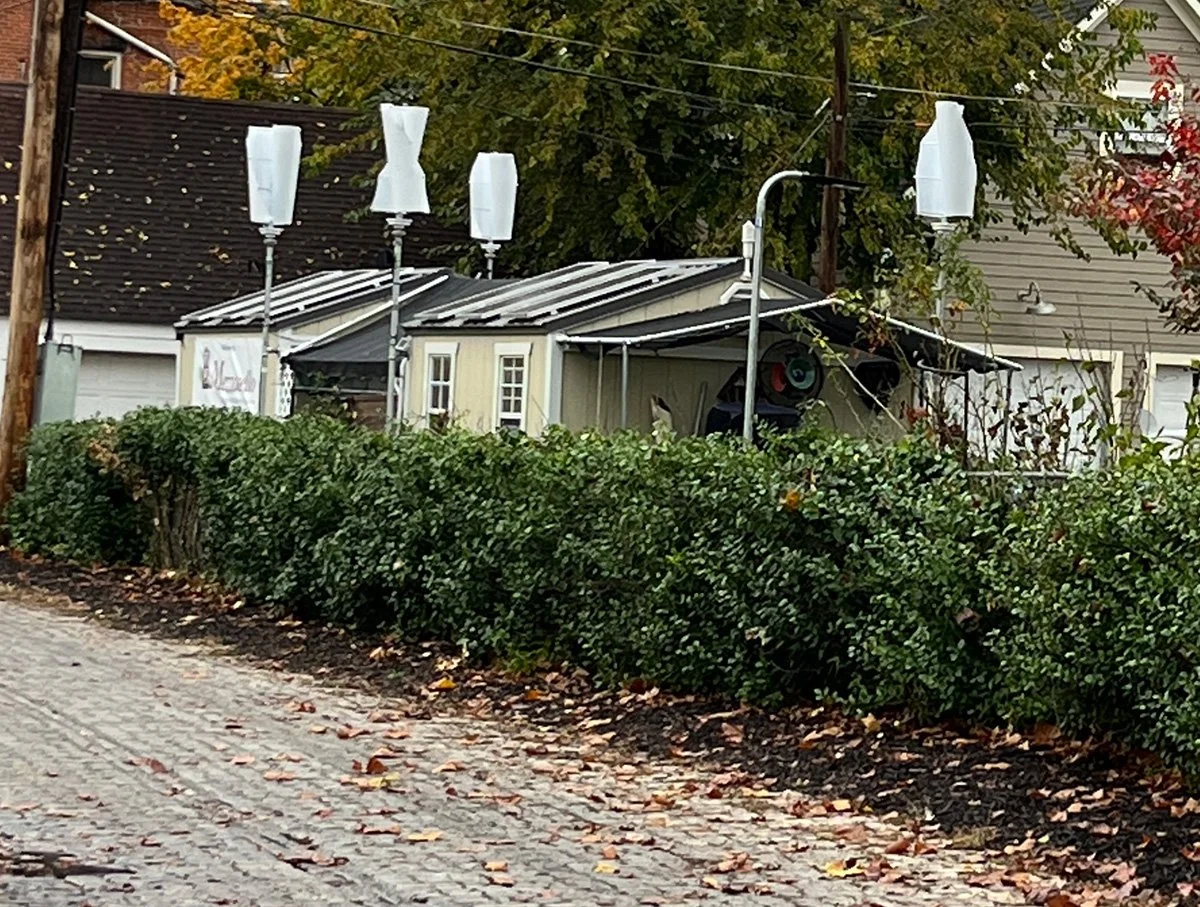
Solar panels and wind turbines
The entire farm is off grid, powered by solar, vertical axis wind turbines powered by natural downtown winds, COTA busses, delivery trucks, and rush hour traffic. 24 Solar Panels are in place in variouis areas of the farm and four mobile labs exist with their own solar arrays and onboard 12V, 15Amp 120Ah AC/DC inverters that can deployed on the farm for research or in a parking lot, playground, classroom or gymnasium.
And all of it - somewhere in it’s development cycle was designed, built, tested, modified, or deployed by kids. Maybe one day your kid can help us innovate and create new STEM empowerment and sustainability options.
