

Reimagine The Chicken Tractor
When we first started building Mezzacello Urban Farm, I learned about Chicken Tractors and used them to fertilize the soil and destroy invasive weeds. It worked like a charm. I could move it every day and the checkens ate grubs, weeds, and 80% less feed. Over time, it became too bulky to move through the emerging garden ecology rooms. So it’s time to Reimagine The Chicken Tractor
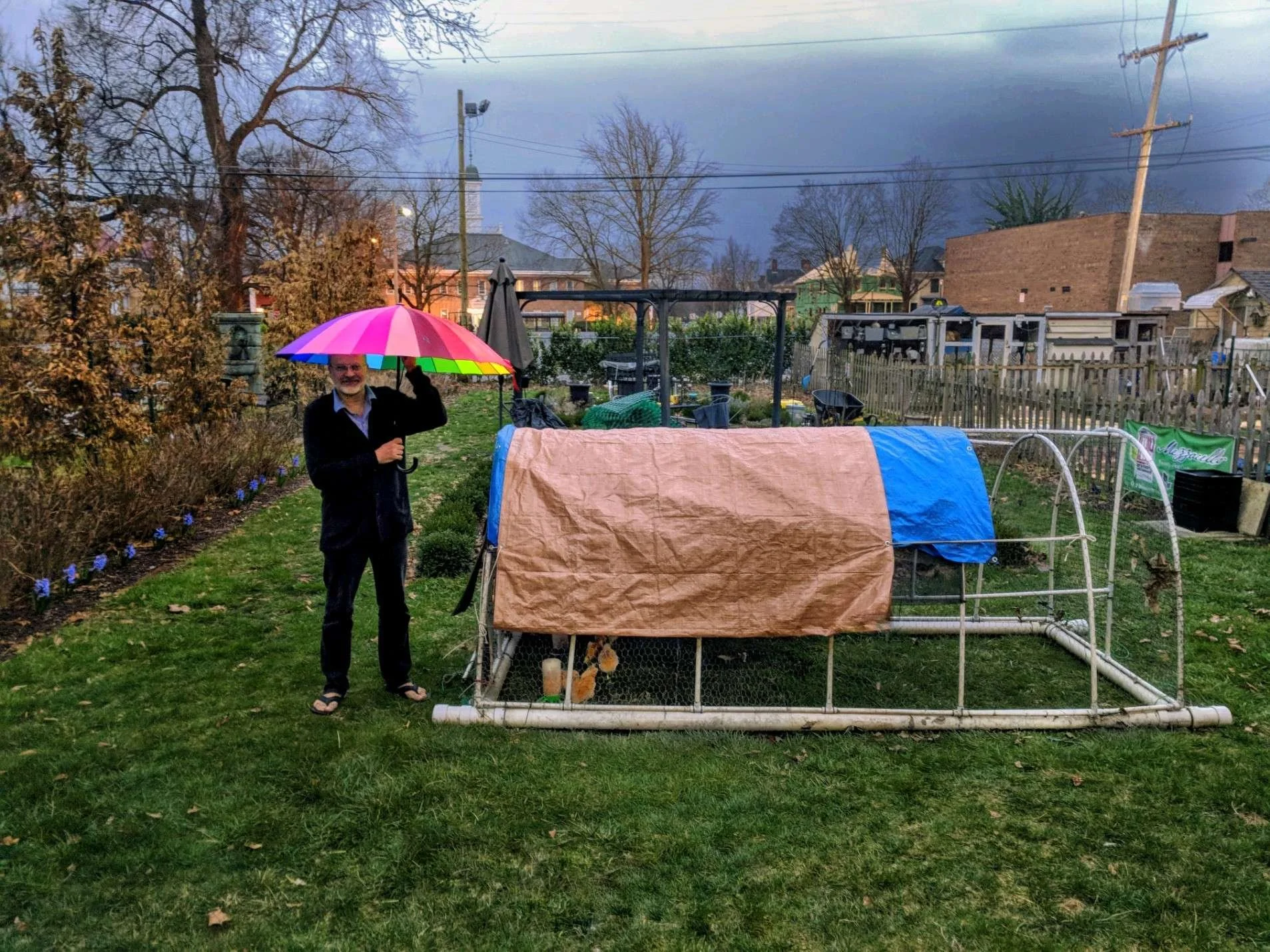
The original 48” x 120” (120cm X 304cm) Chicken Tractor
The Orginal Solution
Our first tractor was a beast! I found the design on YouTube and since it was made from off-the-shelf PVC tubes and fittings, I was able to quickly assemble it. It worked beautifully for many years.
Eventually, it could no longer keep up with the emerging geometries of the enclosed, interdependent gardens of the farm and I had to donate it to another community garden. It’s a shame, because the grass at Mezzacello Urban Farm loved it and so did the chickens!
If you look at the map (below) at the top of the map is the scale (Next to the North symbol at the rop right) You can see the scale is 20’ (6.2m) and if you halve that you can imagine the tractor was NOT going to fit through these tight corners! I drive a 19’ Ford F-150 in downtown Columbus. No thank you.

The current Layout of Mezzacello Urban Farm - Minus the classroom (sad face)
New Geometries, New Technologies
In my summer camps and workshops, I am continually asking kids and families to do TWO things consistently:
When I looked at the PROBLEM of the chicken tractor, it was a problem of scale and a problem of mobility. So I reframed the original idea to include a smaller scale, a more efficient and rugged design, easier mobility, onboard power, feed, and water — AND could still perform it’s three main functions: Fresh feed for the animals, ease of mobility, fertilizing the grass.

The pattern, the structure, the process
The answer was to use the Design Cycle. Brainstorm the problem, Research solutions, Design the Solution, Build The Solution, Test it, Modify it, and then Share or Use It. I can do both here. I always do!

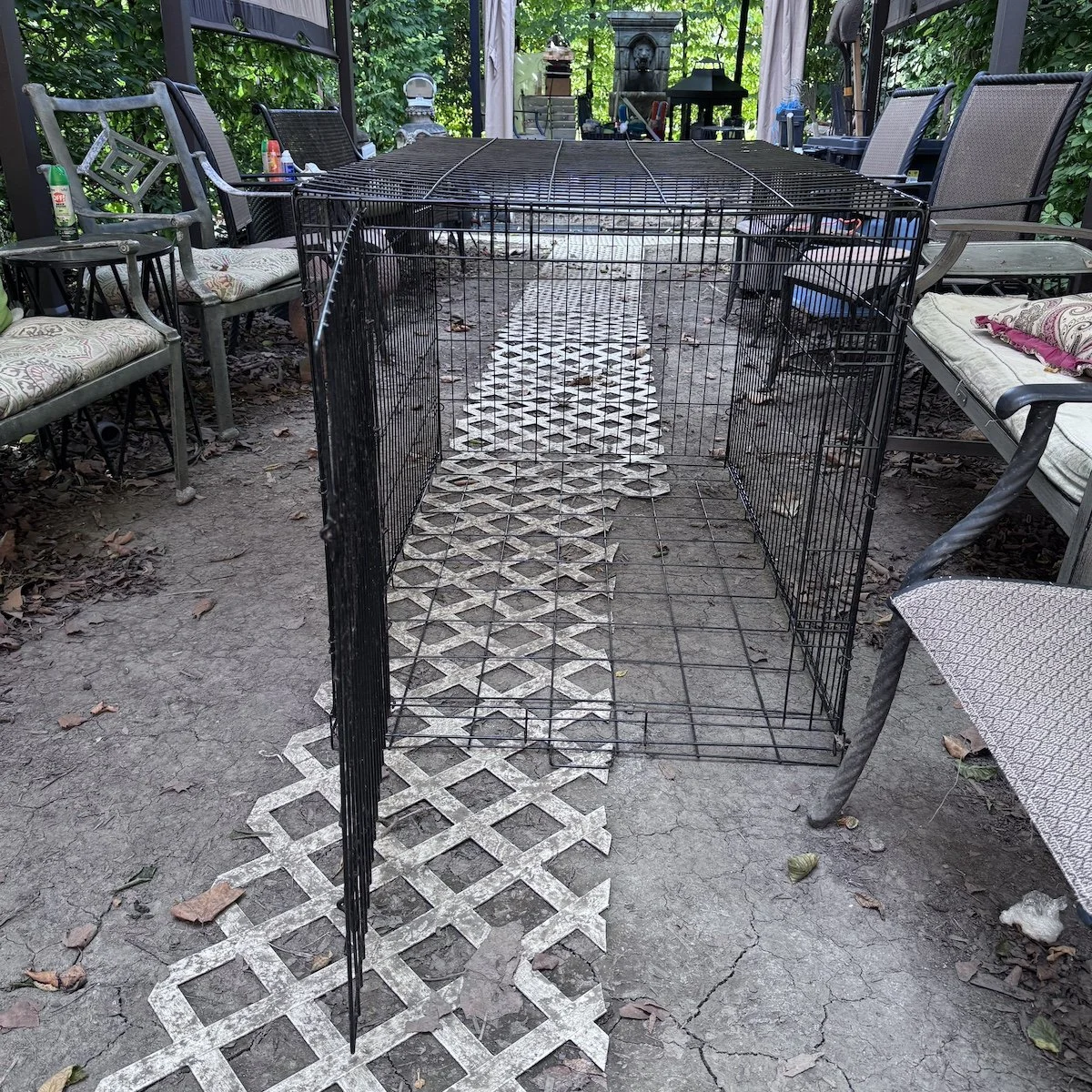
A large, collapsible steel cage
The answer was a large, rigid steel cage (see above) with low bottom mount PVC skis, solar panels and batteries to collect energy, a gutter fitting and a nozzle to collect rainwater from solar panels or to transfer water, a vertical, gravity-fed feed dispensor with a 3D printed nozzle feeder, and dedicated roosting bars for when the coop is moving.
Now, Build It
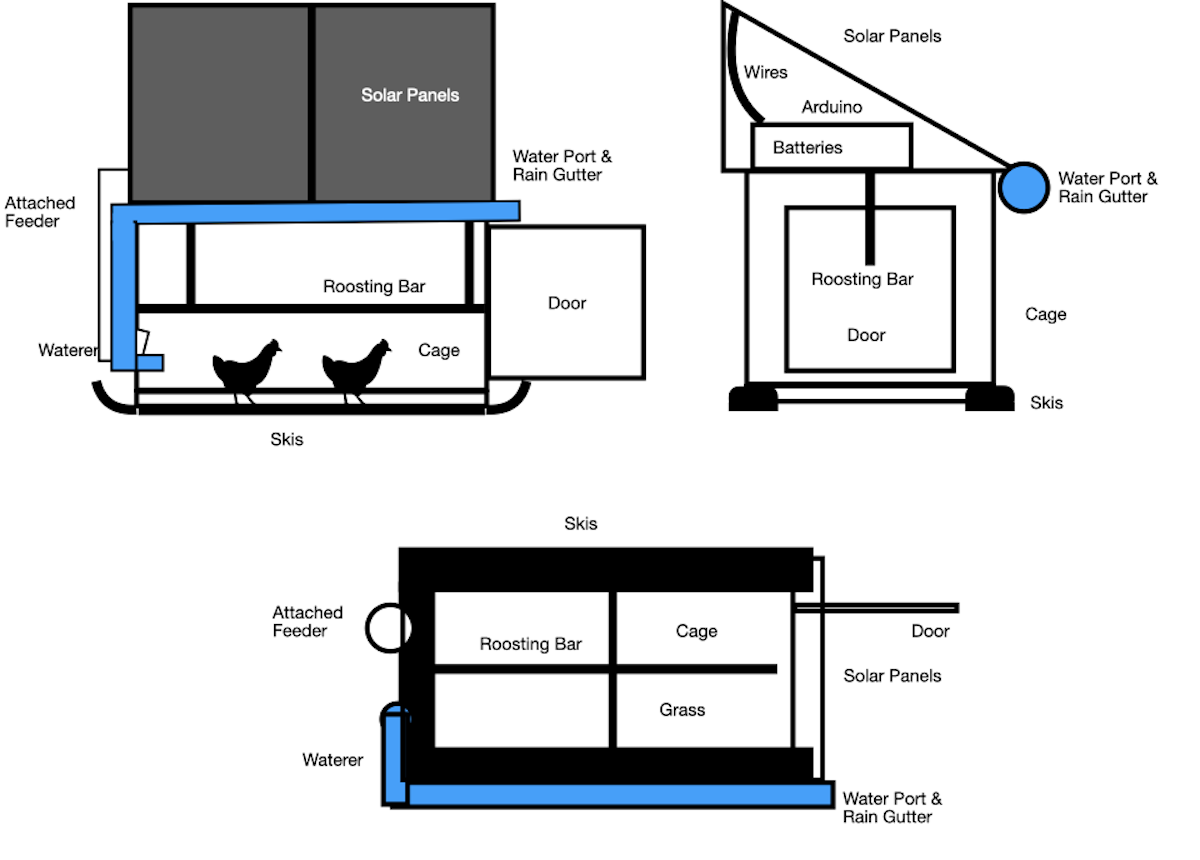
A set of simple elevations and a plan view of the design
This is what I am building today. The solar panels will shade the chickens, power the systems, and help collect onboard water as rain. The batteries will recharge via the charge controller and power lights, and the Arduino - all in a water-tight case, also shaded from the rain and sun. The skis will heep the structure low to the ground and allow it to slide effortlessly on the grass. The smaller size will allow it to easily navigate the tight corners. Check back and see how it turns out.
I will be building a workshop around this transdisciplinary model. If you are interested in that, check out my available workshops using this link.
