

The Super Small and the Quantum World

A nanoscale violin
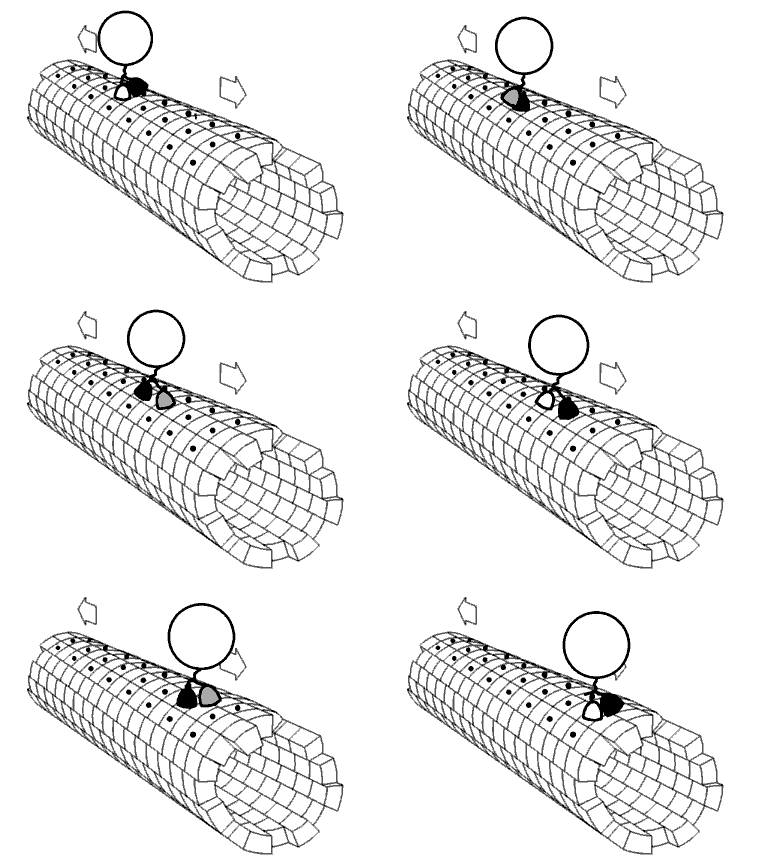
A kinesin molecular machine “walking” in a cell. This is my MenTern Will walking on an atomic-scale bridge filament in the cell.

A sleeker rendering of a kinesin motor
We hear a lot about the super small and the quantum world in our emerging tech in the world, but do we really understand the implications? It’s not enough for something to be small; it must also come with the magic that is ONLY possible when you are dealing with the world of very short distances and volumes that even light has issues with.
The Periodic Table
Of course, we can’t discuss the quantum world without discussing the Periodic Table of the Elements. Why do atoms exist? Why do they act and react like they do?
In Atomic Farming we must understand the usefulness of certain materials, elements, and biological pathways. If we just stick with the idea of “understanding” that some things have “humors” that are out of balance, and NOT understanding the molecular and quantum implications of the modern theory of Germ Disease, pathogen vectors, and materials science — then we can’t optimize health, efficiency, or career opportunities that emerge from working with the wider world of science at the atomic scale and then scale UP.
Blood, Iron, Oxygen, and Carbon
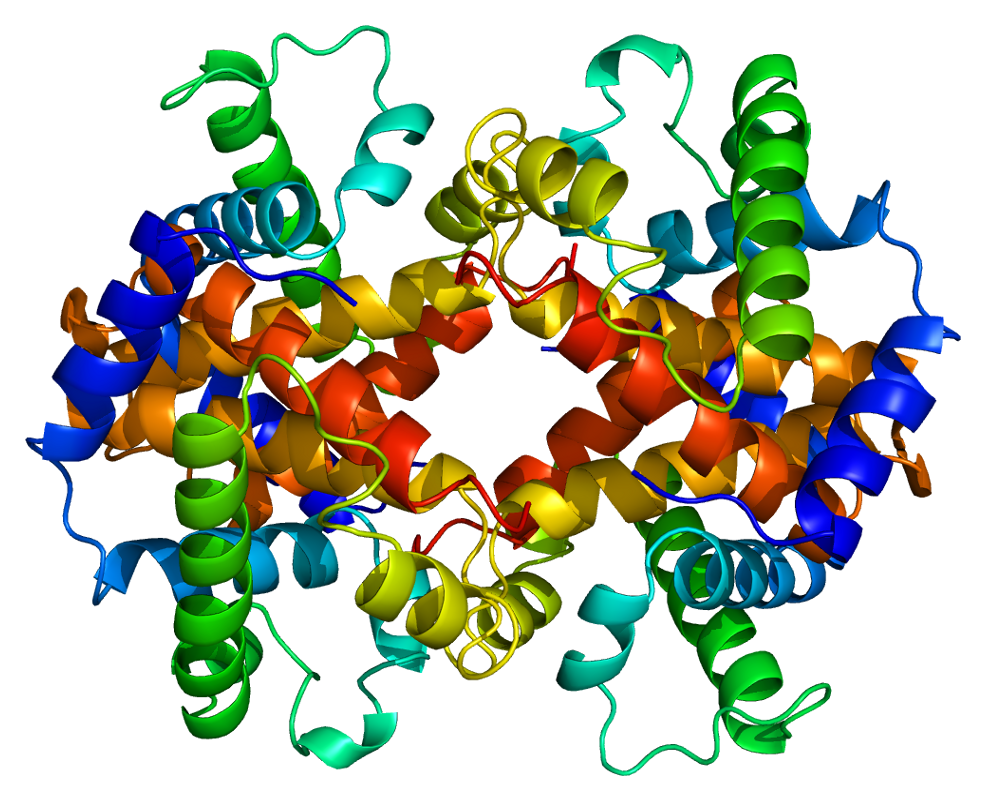
A Hemoglobin Molecule
Human blood contains a molecule called Hemoglobin. It looks pretty crazy! The curly ribbons are special proteins that are coiled like that so that they can bend, twist and move their payload around inside the tiny capilaries and at the doorway to the cell.
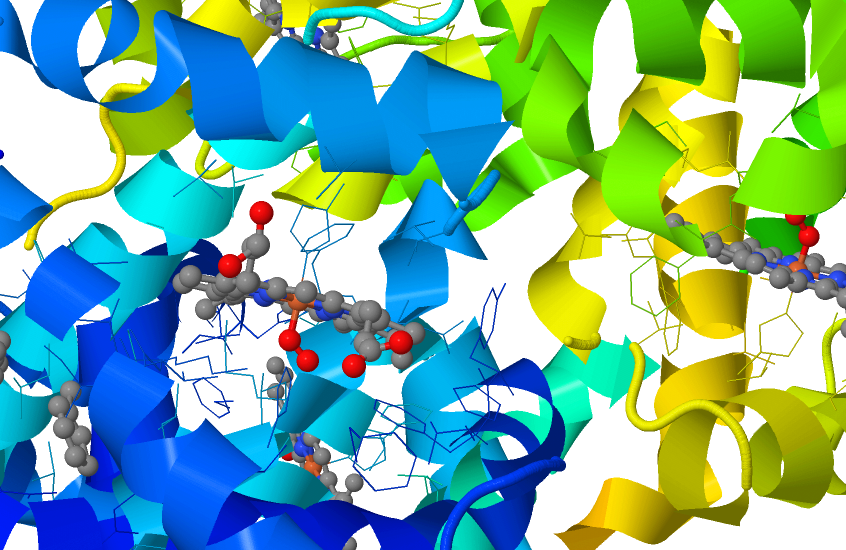
The machine parts of the Hemoglobin Molecule
A closer look at the interior of the hemoglobin molecule. Those stretchy coils allow enzymes and catalysts (the tiny lines you see) to move quickly and with a spring and a snap to release oxygen and grab oxygen when the cell throws it out. The atoms of the molecule (red, green, blue, and gray spheres) are atoms comprising a molecule called “Heme”.
Heme’s entire job is to leverage Fe atoms to oxidize with O atoms (iron and Oxygen). The enzymes “robots” don’t care about anything BUT oxygen. They are crazy for it! The proteins are springy like this to allow those two extra Carbon atoms that are attached to the oxygen as it leaves the cell to have space so the “Hemoglobin robot” can return to the lungs. for more Oxygen.
When Hemoglobin enters the cell loaded with CO2, the lungs’ enzyme robots respond to the attached carbon as a faulty Oxygen atom and through it away. The Hemoglobin and the Heme robots grab another oxygen atom and the lungs PROMISE there is no Carbon attached. We call this molecular respiration.
