
Project Sustainability Energy and Ecology (SEE)
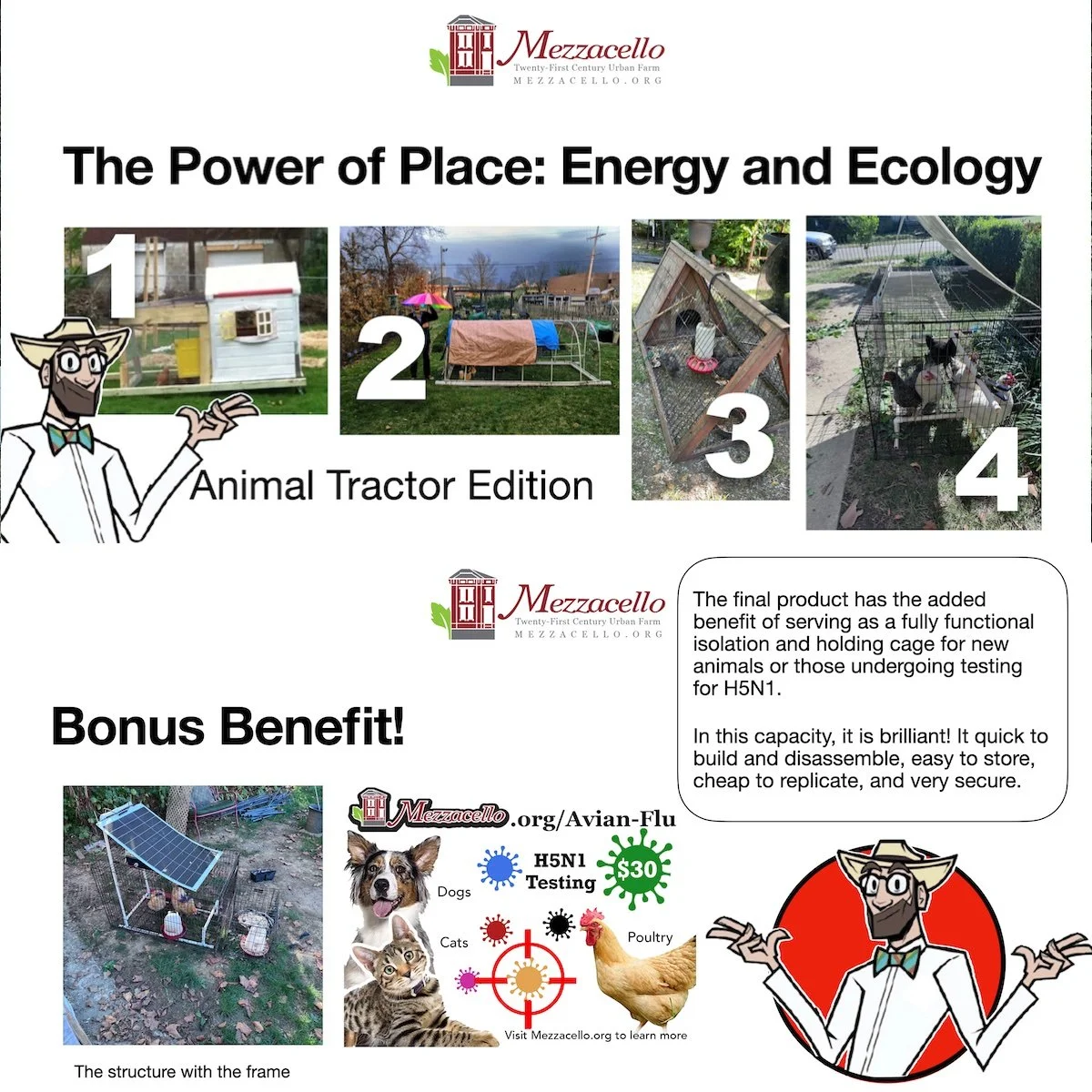
The presentation slide for the STEM Farming Camps
The 2025 Summer Camp Season was tied to two main initiatives. The first was officially launching the MenTern program at Mezzacello Urban Farm. The second was Project SEE which manifested as STEM Farming camps focused on sustainability, energy, and ecology.
STEM Farming Summer Camps
STEM Farming Camps Header
The 10 camps that were run at Mezzacello Urban Farm in summer 2025 were all tied to the complete integration of sustainability, energy, and ecology here at our downtown campus in Columbus, OH.
You can view a recap of the camps here,
Each camp was built on a theme and taught by MenTerns (more on that below) and pre-designed Design Challenges that all resolved into the design, building, and modification of the mobile tractor at Mezzacello, Project SEE.
“The best outcome of the MenTerns project was that when any MenTern was unable to join a camp on a particular day, the teams of kids were already empowered to take action for themselves. They had little doubt that they could accomplish a design challenge or task because they had already seen another kid doing just that.”
Like all projects at Mezzacello Urban Farm, Project SEE is an iteration of the Project camps that have taken place before. I’ll expand on this more further in this blog. The problems, programs, design challenges, and themes are compiled from the successes and surprises of previous camps, grants, and concepts. Project SEE has been the most focused example to date of this strategy.
Project SEE
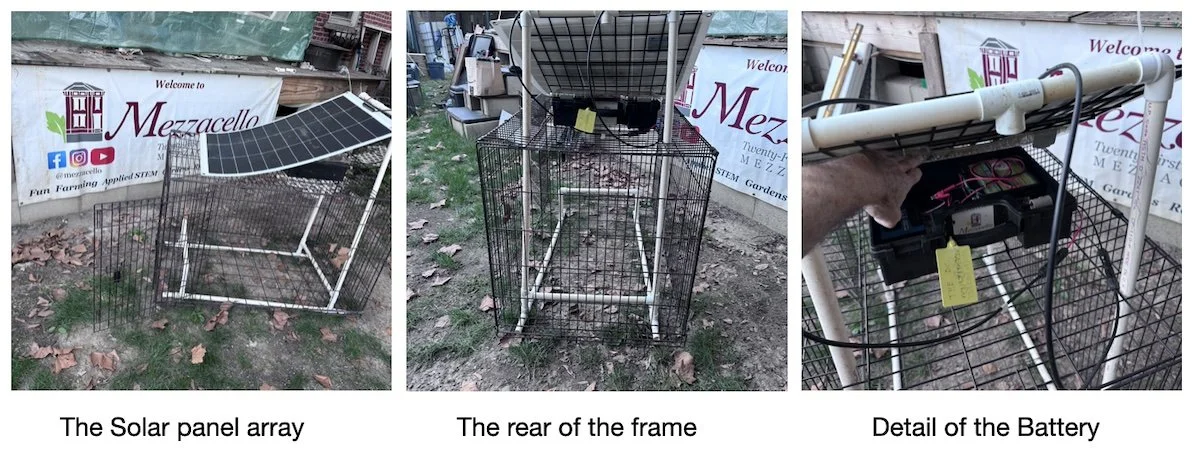
Feed, water, energy, engineering, ecology, and security all built-in.
As each camp progressed, from Life Finds a Way in June to Life Below Water in August, the underlying STEM concepts of Project SEE goal were being addressed and explored. Each camp built and extended the ecology, sustainability, water management, feed production, soil health and regeneration, energy production, bioengineering, and biotechnology concepts. Campers were encouraged to look at problems and solutions from the atom up.
Each of the camps’ themes were designed to introduce, extend, and challenge the concepts presented by the week previous. Each camp terminated with a blog post on the website, published by kids, and a presentation of learning written, produced, filmed, and uploaded to YouTube by the summer camp kids and directed by a MenTern.
Capstone STEM Programming
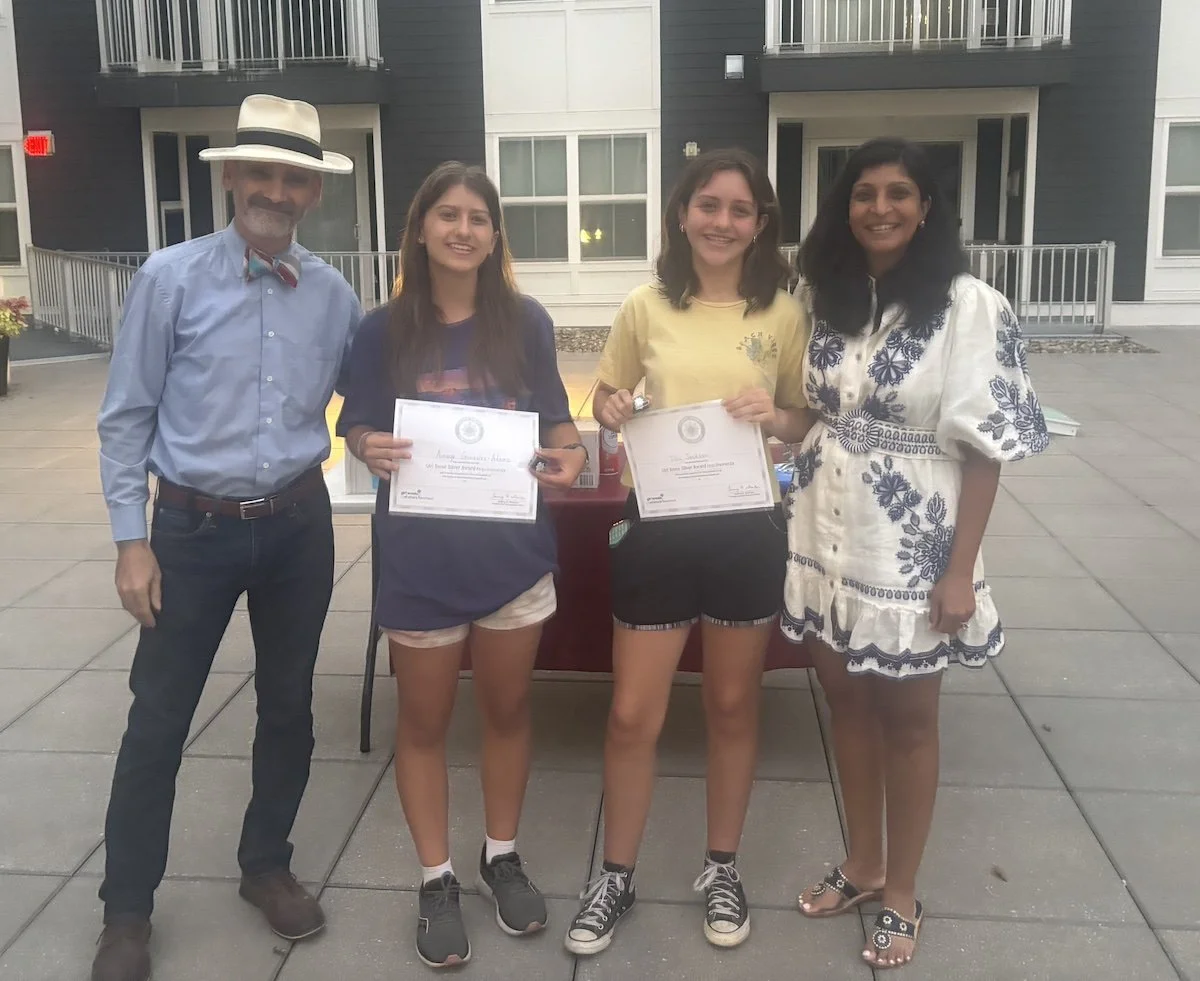
Amaya and Tilly with the Silver Award for their Sustainability in Agriculture Camp
The capstone for the research was conducted by two Middle School Girl Scouts who ran a Sustainability in Agriculture camp they designed as part of the Girl Scouts of Ohio’s Heartland Silver Award. The mobile tractor was the product of all of this and was presented at the October 2025 Global Innovation Field Trip.
Watch the GIFT Presentation on YouTube.
The Role of the MenTerns
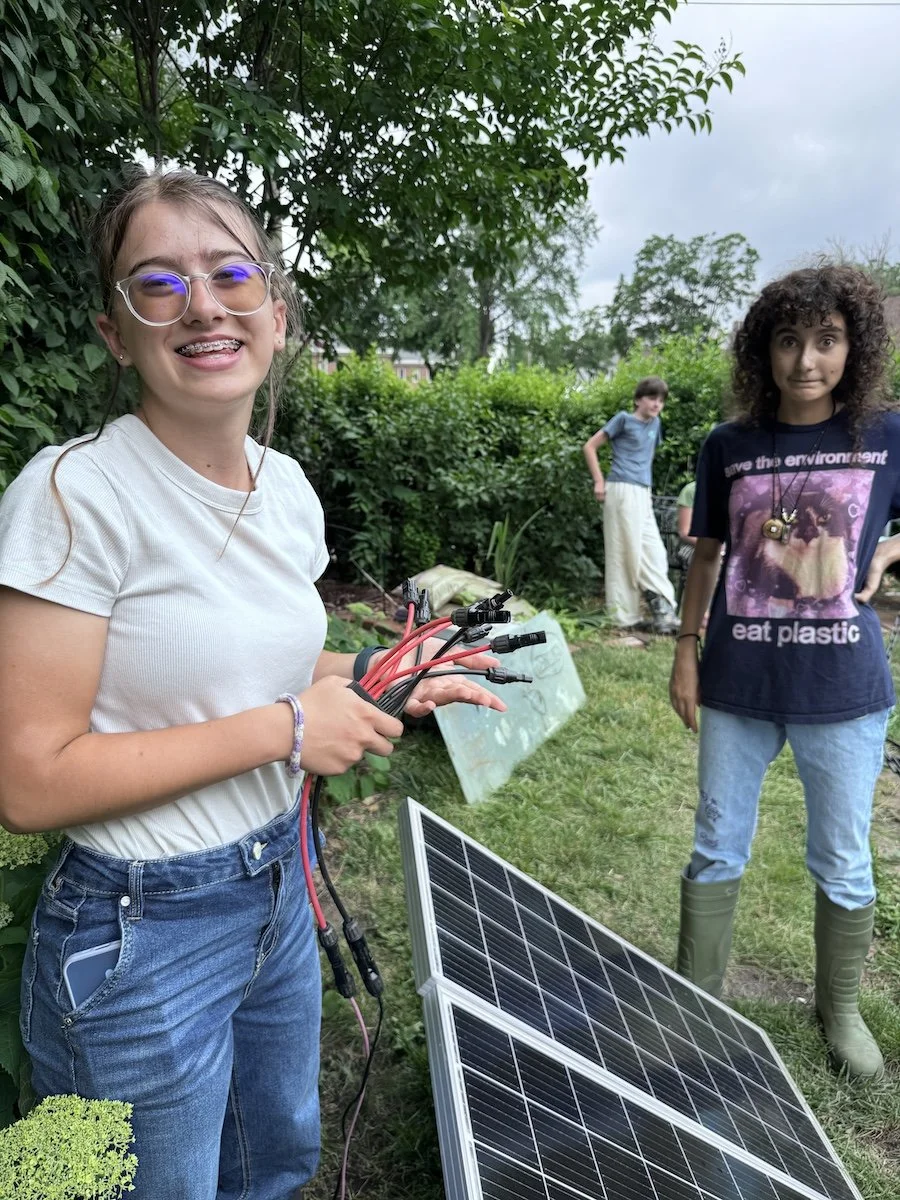
Amaya and Lula teaching physical Electricity to a camp of 15 kids at Mezzacello
The most remarkable aspect of Project SEE and the 2025 STEM in Agraculture camps is how little I actually taught. Most of the programming was co-developed by myself and my 12 MenTerns (Mentor + Intern). Each camp had a series of Design Challenges and focused and scaffolded learning goals that were presented to the campers by my MenTerns. The kids in the camp loved it, and the leadership and confidence ingrained into the MenTerns definitely showed in the pre-and-post-assessments.
The best outcome of the MenTerns project was that when any MenTern was unable to join a camp on a particular day, the teams of kids were already empowered to take action for themselves. They had little doubt that they could accomplish a design challenge or task because they had already seen another kid doing just that.
Knowing that kids were really applying the lessons learned from these programs was the MOST satisfying outcome. Campers would show up with CAD files to 3D print or 3D Printed prototypes they wanted to test. Some showed up with technical equipment they wanted to test and share, while many others came with creative writing or art challenges. The engagement was authentic and rewarding. It points to relevance and I proud of that milestone.
Test Runs Of The Program at Metro
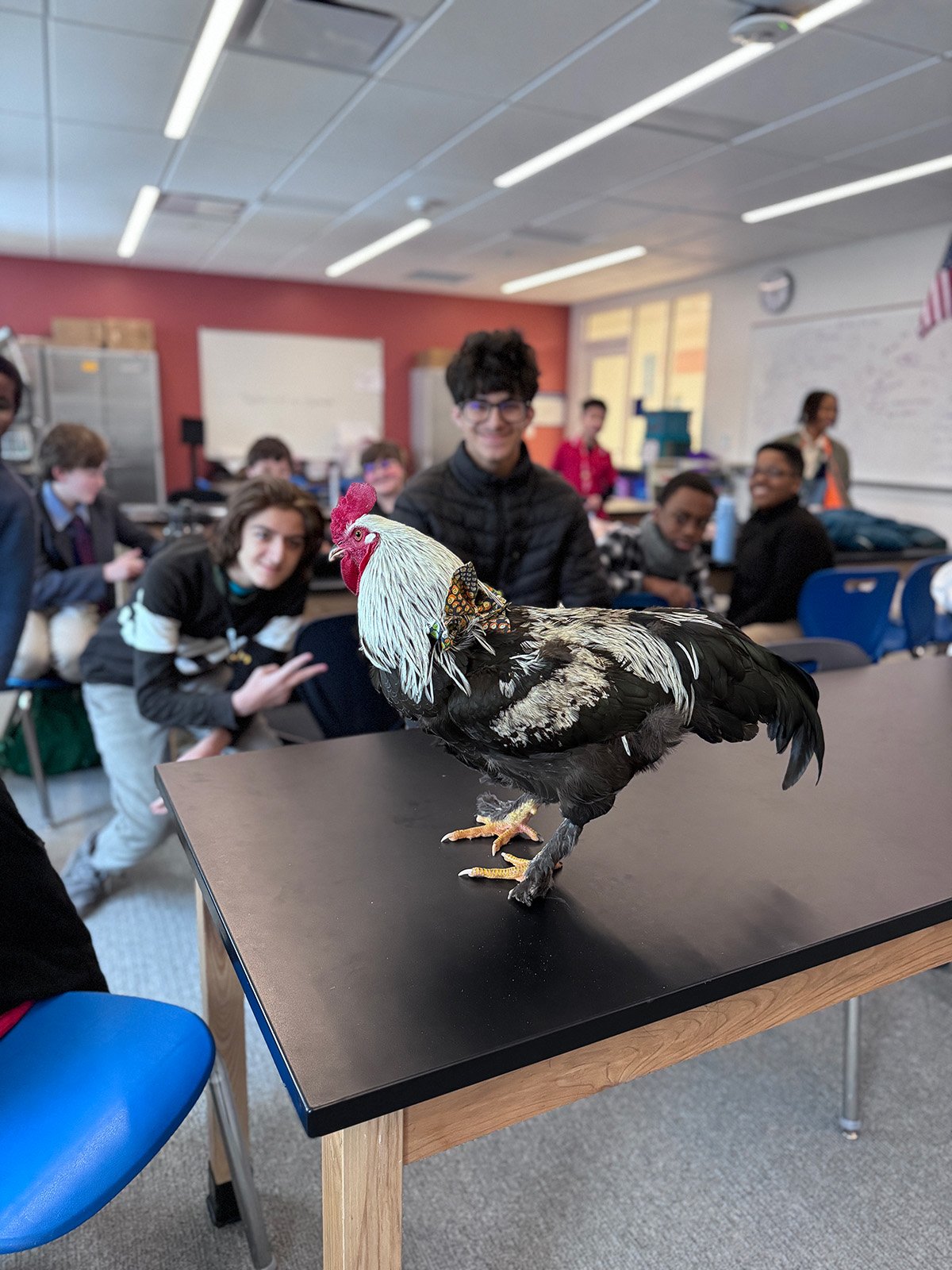
Charles Chickens making a visit to Metro Middle School in January
A major inspiration for Project SEE came from my experience teaching J-Term at Metro Middle School a STEM School here in Columbus, OH. In January, I taught a Sustainability in Agriculture course to five classes of middle school students. In this programming I introduced new ideas inspired by the MenTerns training program I was running simultaneously in January.
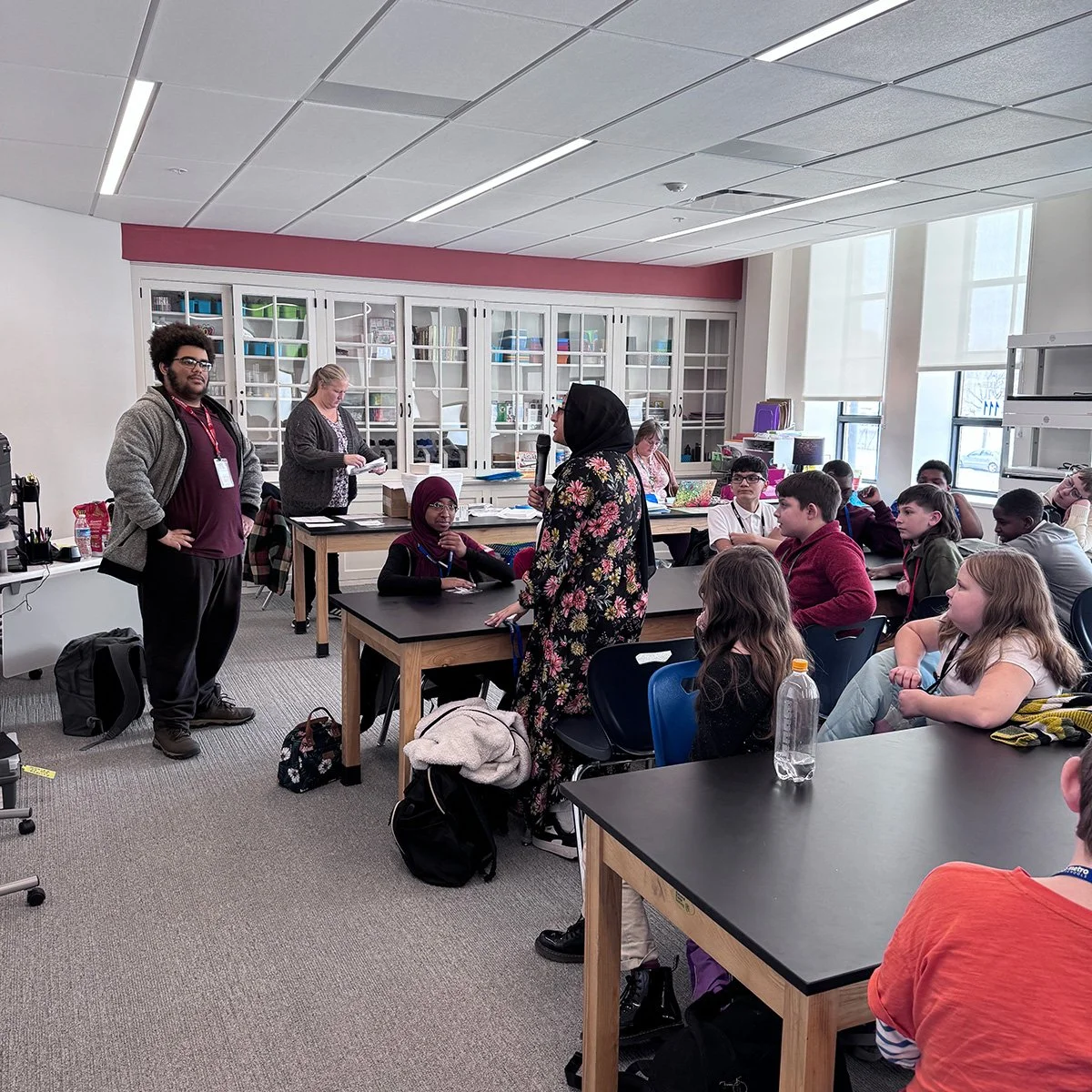
My Columbus City Schools intern teaching a class at Metro
The J-Term STEM would not be complete without a healthy dose of peer-to-peer and near-peer mentorship. My Columbus City Schools intern, Marcus, was instrumental in pulling this off. His research, STEM skills, strong communication skills, and sense of adventure were critical to the success of the J-Term project. A shout out to my friend and mentor, Deb Juracich, and also to Metro Middle School principal Marc Sterner for inviting me.
The course was very well received and the kids loved the hands-on design challenges and presentations that had been inspired by previous summer camps and new ideas the MenTerns were pitching. I will be teaching at Metro again this year. Stay tuned for that.
In Conclusion
Project SEE was the logical extension of every other Project-Based camp series I have run at Mezzacello Urban Farm:
Project Martian - two camps in 2021
Building a bioreactor and engineering lasagna garden soils
Project BioLEGO - five camps in 2022
Designing integrated STEM sensors and products to monitor the farm
Project BioEngineering - six camps in 2023
Exploring integration of ecologies, livestock, and STEM concepts
Project Climate and Ecology - eight camps in 2024
Expanding sustainability, energy, and ecology integration and automation on the farm
Project Sustainability/Energy/Ecology (SEE) - ten camps in 2025
Integrating sustainability, energy, and ecology into the systems of the Urban Farm
While the summer camp program has nearly bankrupted me after the loss of 2/3 of my budget to DOGE cuts, I am very proud of the outcome. I regret nothing and I know I made a difference in the world. I just want to share my successes and teach and learn with my failures. No one can ask for more; no one should demand any less.
If you’ve read this far and are inspired or impressed by my work, please consider donating to my Zeffy Fundraiser. Every donation is tax-deductible and guaranteed to go into project development and expansion of my innovative applied STEM leadership and exploration content. Thanks!
